
Natural Grass vs. Artificial Turf: Which Lawn Is Right for Your Sonoma County Home?
Trying to decide between natural grass and artificial turf? Learn the pros, cons, maintenance requirements, costs, and water-saving benefits to choose the best lawn for your Sonoma County home.
A beautiful lawn can completely transform your outdoor space, but choosing between natural grass and artificial turf is one of the most important landscaping decisions you’ll make. Both options offer distinct advantages, and the right choice depends on your lifestyle, maintenance preferences, budget, and long-term goals.
In Sonoma County, where hot, dry summers and water conservation are ongoing concerns, many homeowners are exploring alternatives to traditional lawns. Whether you’re designing a new landscape or renovating an existing yard, understanding the benefits and drawbacks of each option can help you make the best investment for your property.
The Benefits of Natural Grass
Nothing quite matches the beauty and feel of a healthy, living lawn. Natural grass creates a welcoming outdoor environment while offering several environmental and practical advantages.
Cooler Outdoor Spaces
Unlike synthetic surfaces, natural grass absorbs heat and releases moisture through evaporation, helping keep your yard cooler during Sonoma County’s warm summer months. This makes it more comfortable for children, pets, and outdoor entertaining.
Environmental Benefits
A living lawn contributes to a healthier landscape by producing oxygen, filtering airborne dust and pollutants, and supporting beneficial soil organisms. Grass also absorbs rainwater, helping reduce runoff and erosion while naturally replenishing the soil.
Authentic Beauty
For many homeowners, the appearance, texture, and scent of real grass simply can’t be duplicated. A well-maintained lawn provides a timeless look that complements nearly every landscape style.
Lower Initial Installation Cost
Natural sod or seeded lawns generally cost less to install than premium artificial turf, making them an attractive option for homeowners working within a landscaping budget.
The Drawbacks of Natural Grass
While natural lawns are beautiful, they require ongoing care to stay healthy throughout the year.
Typical maintenance includes:
Regular mowing
Routine watering
Fertilization
Weed control
Seasonal aeration and overseeding
Pest and disease management
During Sonoma County’s dry summers, maintaining a lush lawn can also increase water usage unless paired with an efficient irrigation system.
Why More Homeowners Are Choosing Artificial Turf
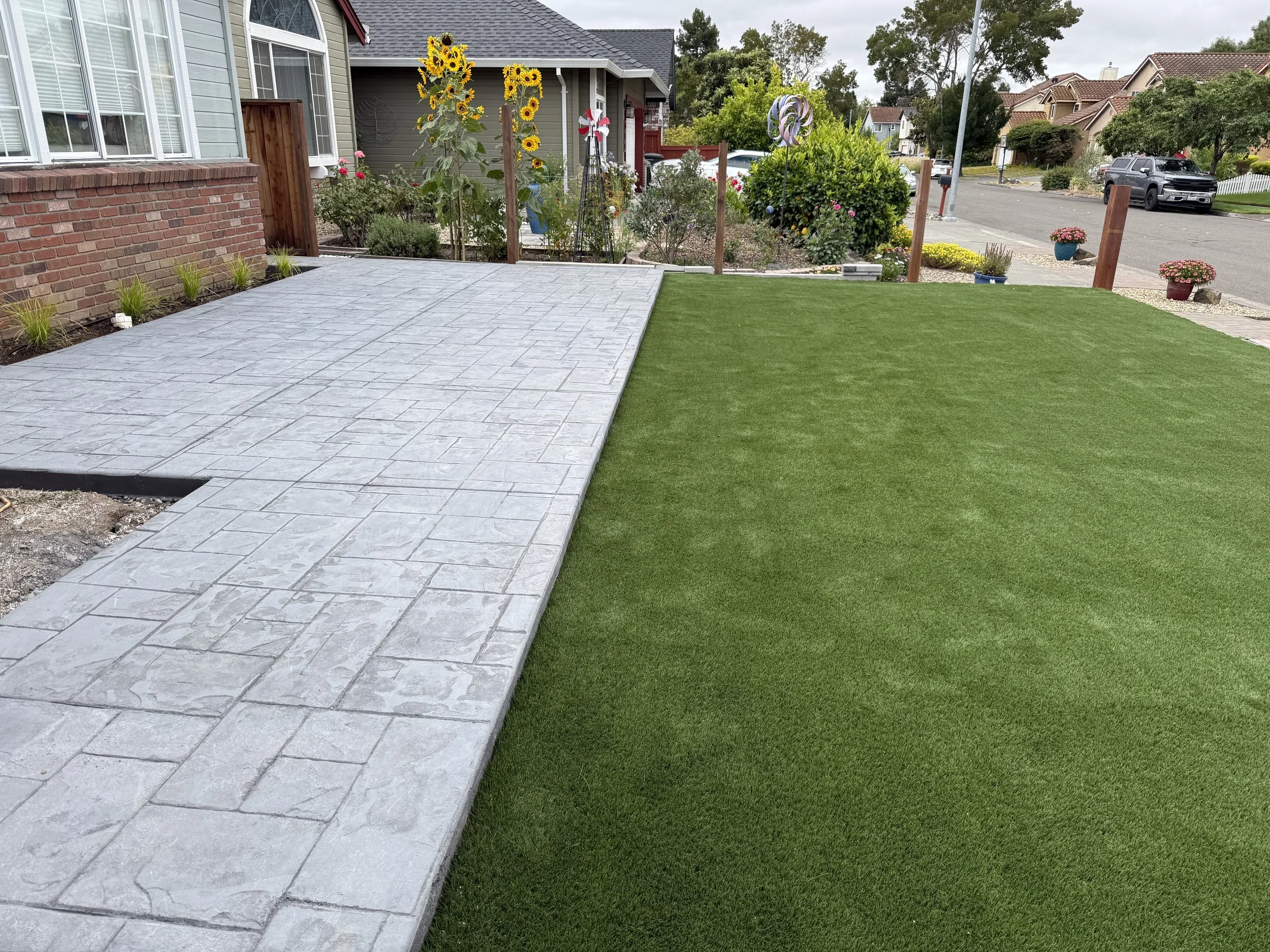
Today’s artificial turf looks far more realistic than earlier generations. Modern products feature natural color variation, soft textures, and advanced drainage systems that closely mimic the appearance of a healthy lawn while dramatically reducing maintenance.
Low-Maintenance Living
Artificial turf eliminates many of the chores associated with traditional lawns. There’s no mowing, fertilizing, edging, or reseeding, allowing homeowners to spend more time enjoying their outdoor space.
Green All Year Long
Synthetic turf maintains its vibrant appearance through every season without developing brown spots, thinning areas, or muddy patches.
Durable for Families and Pets
Artificial turf stands up well to heavy foot traffic, active children, and pets. It won’t wear down as quickly as natural grass and performs especially well in play areas and dog runs. While pet-friendly turf systems drain efficiently, occasional cleaning may be needed to help minimize odors over time.
Significant Water Savings
One of the biggest advantages of artificial turf is water conservation. Since it requires little to no irrigation, homeowners can dramatically reduce outdoor water use while maintaining a consistently green landscape.
The Drawbacks of Artificial Turf
Although artificial turf offers many conveniences, it also has a few considerations.
Potential disadvantages include:
Higher upfront installation costs
Surface temperatures that can become hot in direct sunlight
Occasional brushing and cleaning to maintain appearance
Professional installation is essential for proper drainage and longevity
Does not provide the environmental benefits of living grass
Which Option Is Best for Your Landscape?
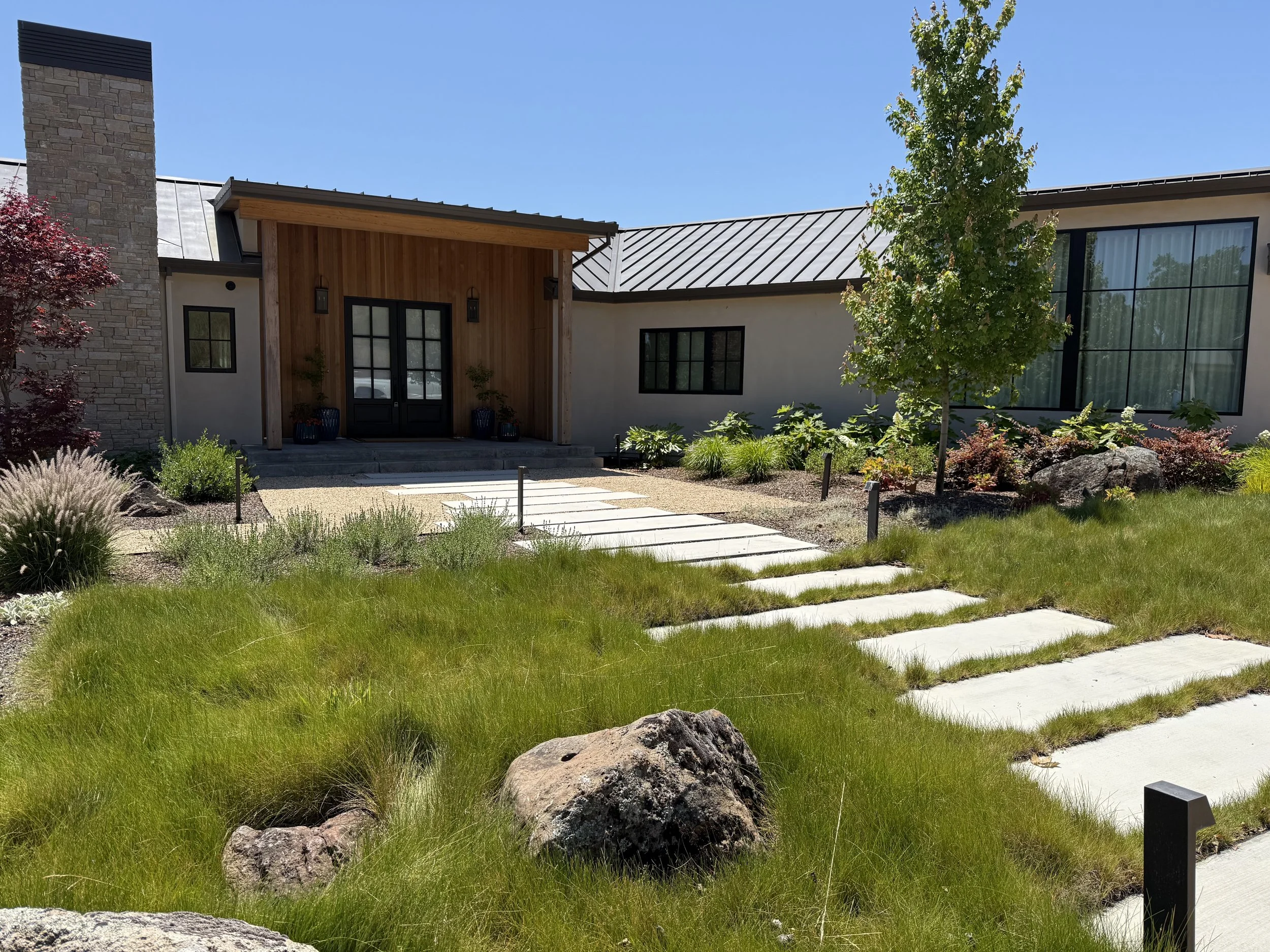
Native Preservation Grass and Sonoma Fielstone Boulders in Windsor, CA.
The right lawn depends on how you use your outdoor space.
Natural Grass May Be Right for You If:
You enjoy the look and feel of a living lawn.
You want a naturally cooler outdoor surface.
Environmental benefits are important to you.
You’re comfortable with routine lawn maintenance.
You want a lower initial installation cost.
Artificial Turf May Be the Better Choice If:
You prefer a low-maintenance landscape.
Water conservation is a priority.
You have pets or high-traffic areas.
You want a consistently green lawn year-round.
You’d like to reduce ongoing lawn care expenses.
Consider a Hybrid Landscape
Many Sonoma County homeowners are discovering that they don’t have to choose one option exclusively. Combining natural grass and artificial turf can create a landscape that’s both beautiful and practical.
Popular combinations include:
Natural grass for entertaining and play areas
Artificial turf in dog runs or side yards
Turf in heavily shaded locations where grass struggles to grow
Drought-tolerant planting beds surrounding turf for a balanced, water-wise design
A hybrid landscape allows you to enjoy the benefits of both materials while reducing maintenance and conserving water.
Make the Right Choice with Moonlight Landscapes
Whether you prefer the timeless appeal of natural grass, the convenience of artificial turf, or a combination of both, thoughtful planning is the key to a successful landscape.
At Moonlight Landscapes, we help Sonoma County homeowners design and install outdoor spaces that fit their lifestyle, complement the local climate, and provide lasting beauty. We’ll evaluate your property’s sunlight, drainage, soil conditions, and intended use to recommend the best lawn solution for your home.
If you’re ready to transform your landscape, contact Moonlight Landscapes to schedule a consultation and discover which option is right for your outdoor living space.