
Pollinator-Friendly Plants for Northern California Gardens
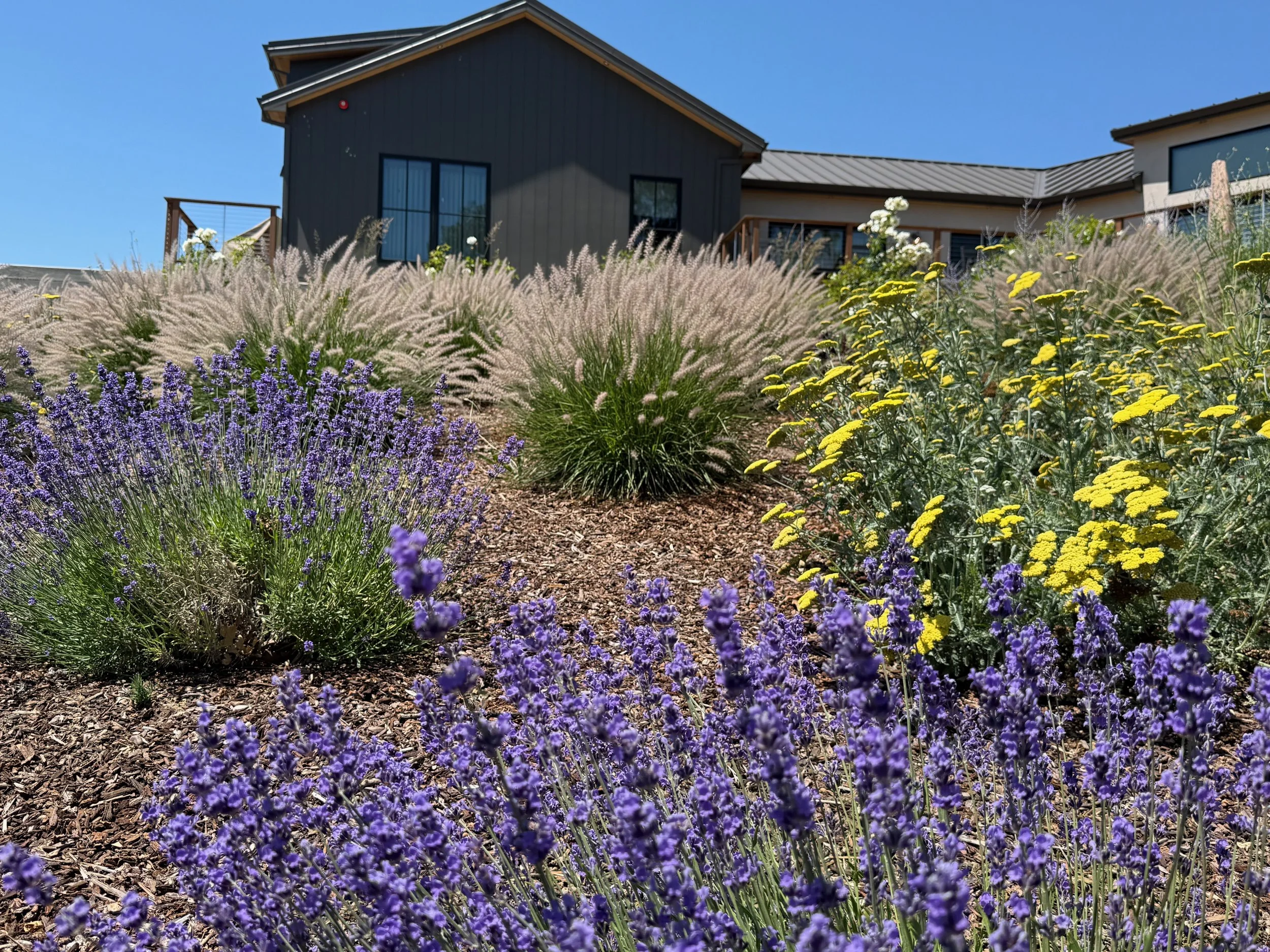
A colorful Northern California pollinator garden featuring California native flowers, lavender, salvia, yarrow, and manzanita surrounding natural stone pathways. Honeybees, monarch butterflies, and hummingbirds gather among the blooms in a professionally designed, drought-tolerant landscape in Sonoma County.
Pollinator-Friendly Plants for Northern California Gardens
Creating a landscape that attracts bees, butterflies, hummingbirds, and other beneficial wildlife is one of the best ways to support Northern California’s natural ecosystem while enhancing the beauty of your outdoor space. A thoughtfully designed pollinator garden provides year-round color, seasonal interest, and a healthy habitat for native species. At Moonlight Landscapes, we incorporate pollinator-friendly and drought-tolerant plants into custom landscape designs that are both beautiful and environmentally responsible.
Why Pollinator-Friendly Landscaping Matters
Pollinators are essential to healthy ecosystems. Bees, butterflies, birds, and other beneficial insects help pollinate flowers, vegetables, fruit trees, and native plants, supporting biodiversity throughout Northern California. Unfortunately, habitat loss, urban development, and prolonged drought have reduced the availability of natural food sources.
By incorporating native flowering plants, shrubs, and trees into your landscape, you can create a welcoming habitat that provides nectar, pollen, seeds, berries, and shelter throughout the year.
Best Plants for Attracting Bees
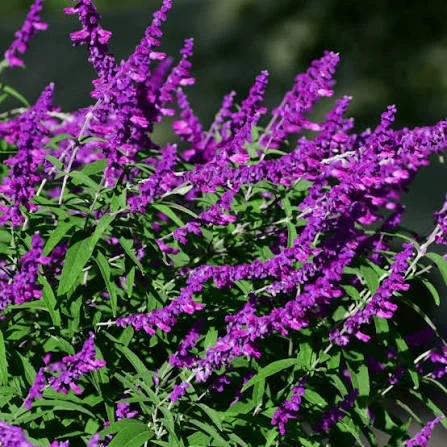
Salvia Leucantha attracts birds, butterflies, and Hummingbirds in a Sonoma County Garden.
Bees thrive in gardens filled with nectar-rich flowers that bloom throughout the growing season. Many California native plants are especially valuable because they are adapted to our Mediterranean climate and require less irrigation once established.
Some of the best bee-friendly plants include:
California Lilac (Ceanothus) – Early spring blooms that provide an important nectar source for native bees.
Lavender – Highly fragrant, long-blooming, and loved by honeybees.
Salvia – Drought-tolerant perennials that bloom for months and attract numerous pollinator species.
Manzanita – Winter flowers provide one of the earliest food sources for pollinators.
Sunflowers – Rich in pollen and seeds while adding bold seasonal color.
These plants perform well in Sonoma County landscapes and require relatively little maintenance after establishment.
Plants That Attract Butterflies
Butterflies require two types of plants: nectar-producing flowers for adults and host plants where caterpillars can develop. Including both creates a complete habitat that supports every stage of the butterfly life cycle.
Excellent butterfly plants include:
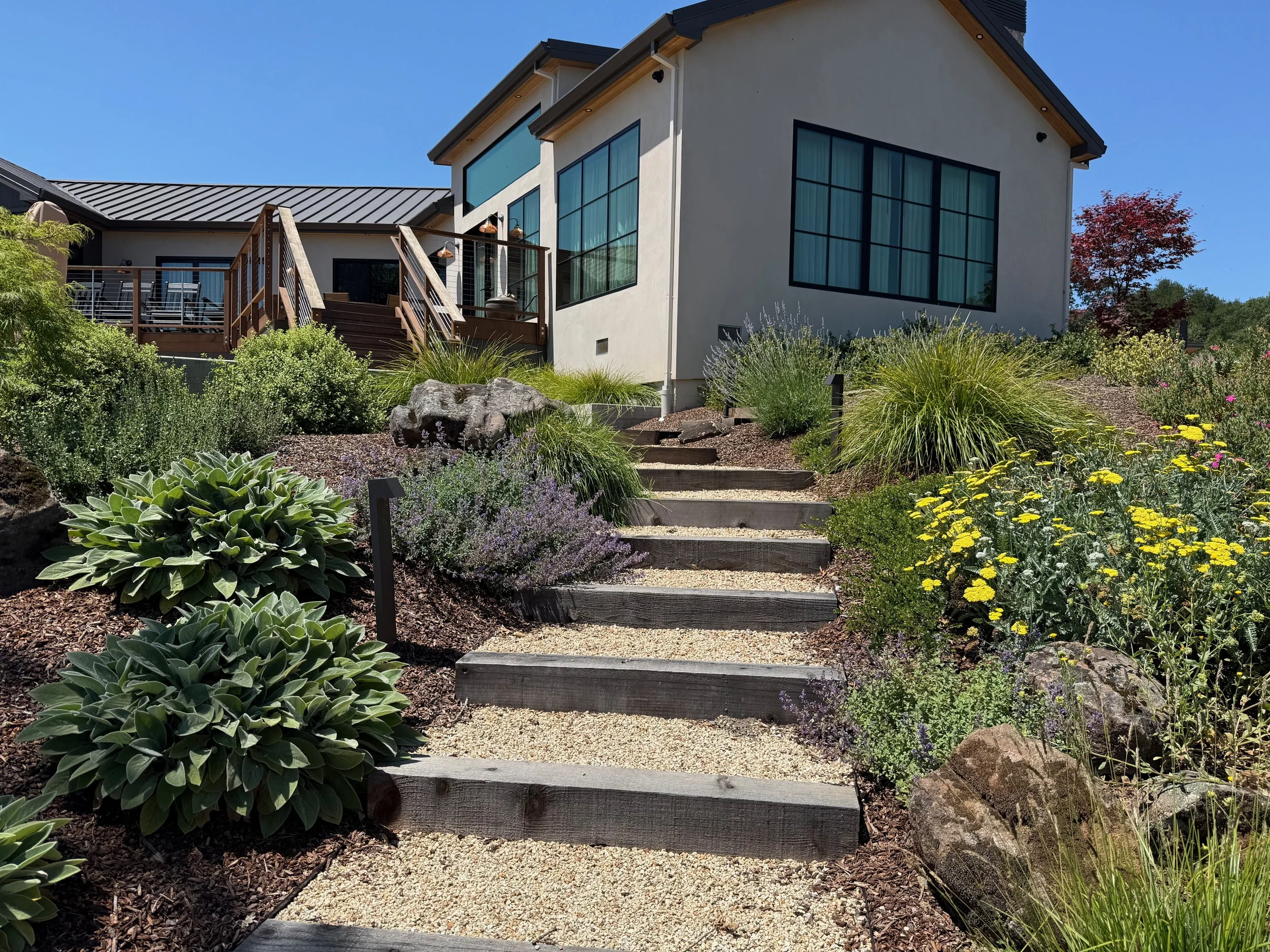
Yarrow and Nepeta surround this gravel staircase in Sonoma County, attracting bees and butteflies along with beautiful and yellow and purple flowers during the summer months.
Milkweed (Asclepias) – Essential for Monarch butterflies.
Yarrow (Achillea) – A hardy native perennial with long-lasting blooms.
Verbena – Produces abundant nectar throughout the summer.
Coneflower (Echinacea) – Adds vibrant color while attracting numerous pollinators.
Toyon – A California native shrub that offers flowers, berries, and year-round interest.
Planting flowers in large groupings rather than scattering individual plants helps butterflies locate nectar more efficiently.
Bird-Friendly Plants for Northern California Landscapes
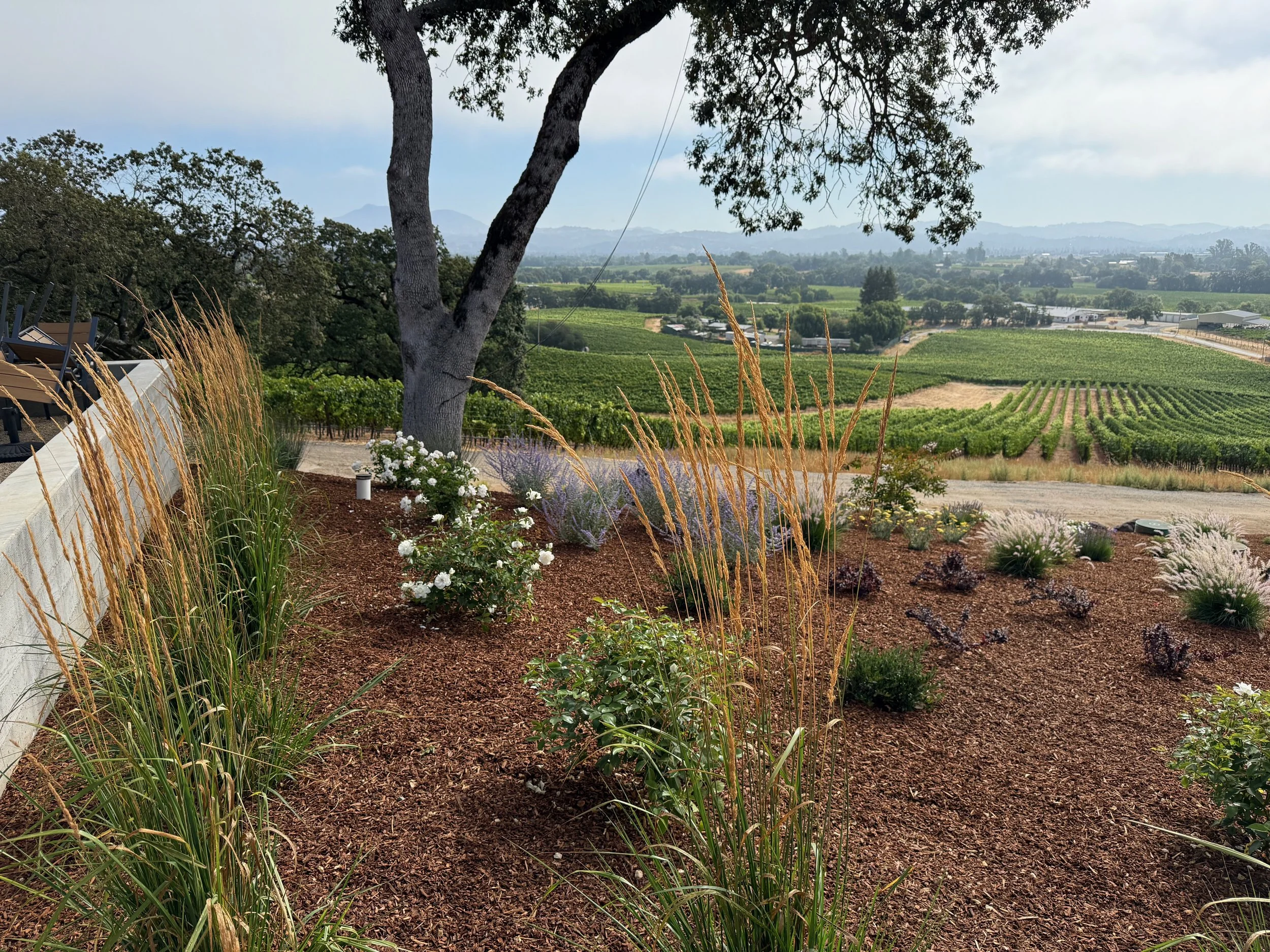
Large oak trees like this one offer great places for local Sonoma County birds to nest and take shelter. These trees also are a food source for other local wildlife.
Birds depend on landscapes that provide food, water, nesting sites, and shelter. Incorporating a variety of trees, shrubs, and flowering perennials creates a balanced habitat for year-round bird activity.
Popular bird-friendly plants include:
California Fuchsia – A favorite of hummingbirds during late summer and fall.
Elderberry – Produces berries enjoyed by many native bird species.
Red-Flowering Currant – Early blooms provide valuable nectar for hummingbirds.
Coast Live Oak – Supports hundreds of native insects while providing nesting habitat and acorns for wildlife.
Bottlebrush – Bright red flowers attract hummingbirds throughout the blooming season.
Larger trees and dense shrubs also provide important protection from predators while creating nesting opportunities.
Designing a Successful Pollinator Garden
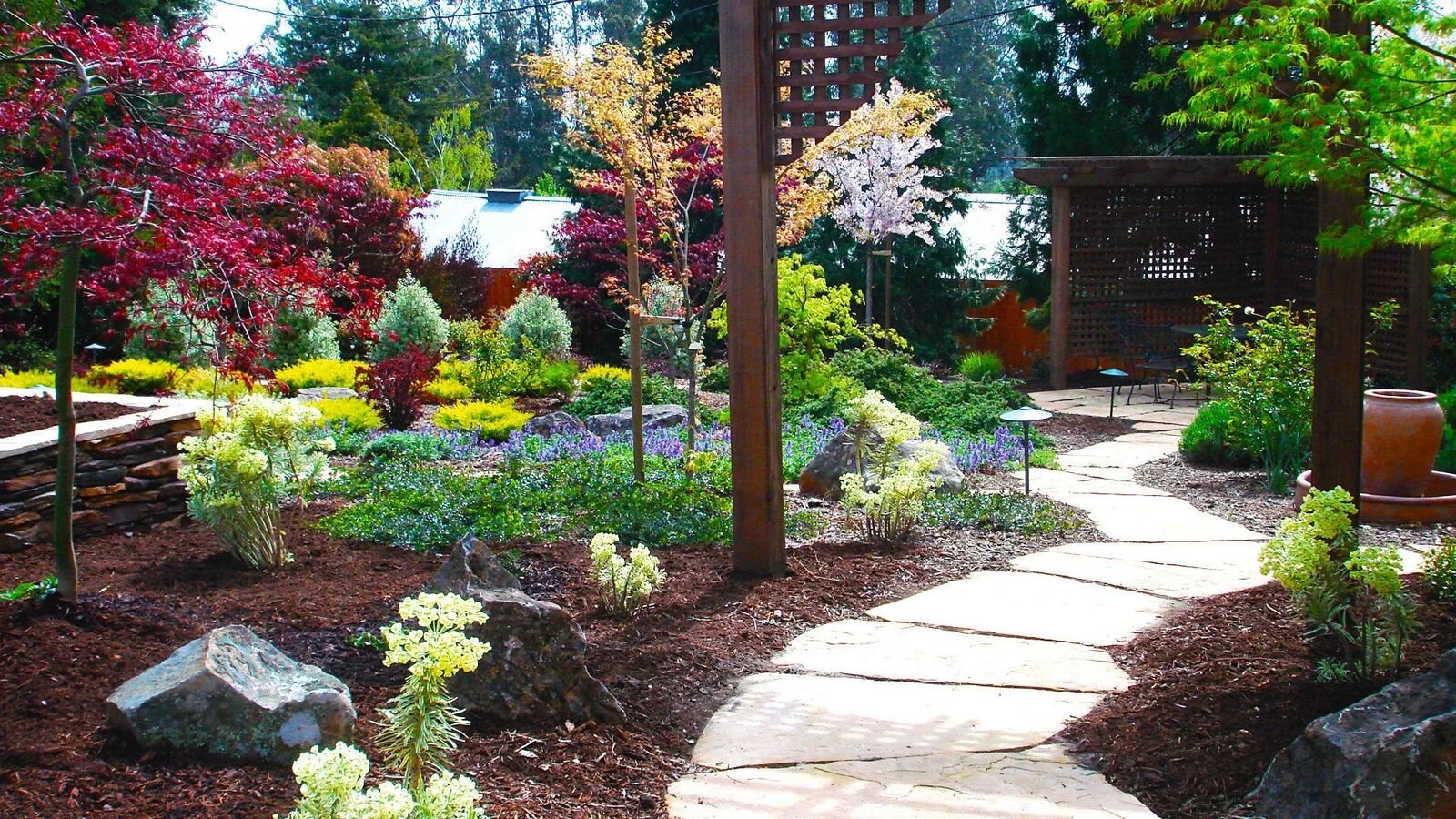
The most effective pollinator gardens combine a variety of plant types that bloom during different seasons, ensuring food is available throughout the year.
A successful pollinator landscape often includes:
Native trees and flowering shrubs
Drought-tolerant perennials
Ornamental grasses and groundcovers
Layered planting for diverse habitat
Small water features or shallow bird baths
Organic gardening practices that minimize pesticide use
Thoughtful landscape design creates a healthy balance between aesthetics, functionality, and ecological value.
Why Choose Native California Plants?
Native plants are naturally adapted to Northern California’s climate, making them more resilient to drought and requiring less irrigation than many non-native species. They also provide the most beneficial food sources for local pollinators because native wildlife has evolved alongside these plants for thousands of years.
Using California native plants can also reduce maintenance, improve soil health, conserve water, and increase biodiversity throughout your landscape.
Work with a Professional Landscape Designer
Designing a pollinator-friendly garden involves more than selecting flowering plants. Sun exposure, soil conditions, irrigation, bloom timing, and plant spacing all contribute to the long-term success of the landscape.
At Moonlight Landscapes, we design and install sustainable landscapes throughout Sonoma County that combine native plants, water-wise design, and exceptional craftsmanship. Whether you’re renovating an existing garden or creating a brand-new outdoor space, we can help you build a landscape that supports local wildlife while enhancing your property’s beauty and value.
Create a Living Landscape That Gives Back
A pollinator-friendly landscape is more than a beautiful garden—it’s an investment in the health of your local environment. By choosing native plants that attract bees, butterflies, hummingbirds, and beneficial insects, you’ll enjoy a vibrant outdoor space filled with color, movement, and seasonal beauty while helping support Northern California’s unique ecosystem for generations to come.