
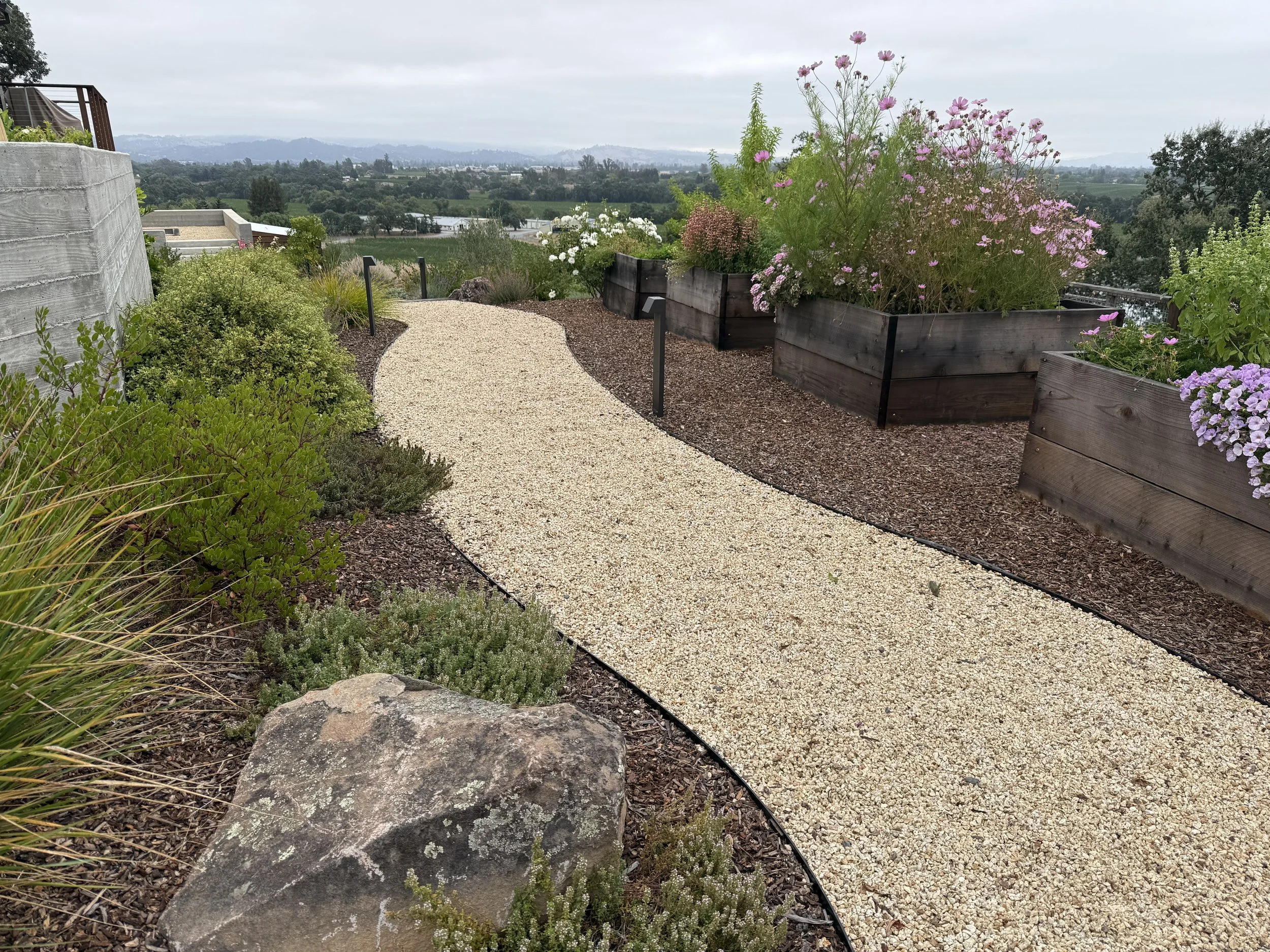
Vegetable Gardens and Edible Landscaping in Northern California
It All Begins Here
Growing your own fruits, vegetables, and herbs has never been more popular. Homeowners throughout Sonoma County are discovering that edible gardens can be just as beautiful as they are productive. By incorporating raised vegetable beds, fruit trees, culinary herbs, and edible plants into a thoughtfully designed landscape, you can create an outdoor space that provides fresh food, supports sustainability, and enhances your property’s beauty.
At Moonlight Landscapes, we design edible landscapes that blend seamlessly with patios, pathways, ornamental plantings, and water-wise gardens, creating outdoor spaces that are both functional and visually stunning.
Why Add an Edible Garden to Your Landscape?
An edible landscape offers far more than fresh produce. It creates a healthier, more sustainable way of living while adding year-round interest to your yard.
Benefits of edible landscaping include:
Fresh, homegrown vegetables, herbs, and fruit
Reduced grocery costs
Improved outdoor living spaces
Increased biodiversity and pollinator habitat
Sustainable gardening practices
Beautiful seasonal color and texture
Greater connection to nature and gardening
Whether you have a spacious backyard or a compact garden, edible plants can be incorporated into landscapes of nearly any size.
Planning a Successful Vegetable Garden
Every productive vegetable garden begins with proper planning. Most vegetables perform best in locations that receive six to eight hours of direct sunlight each day and have fertile, well-draining soil.
When designing an edible garden, it’s important to consider:
Sun exposure throughout the seasons
Soil quality and drainage
Convenient access to water
Efficient irrigation systems
Raised garden beds for improved soil control
Easy access for planting, harvesting, and maintenance
Thoughtful planning ensures healthy plants, higher yields, and a garden that’s enjoyable to work in throughout the year.
Best Vegetables for Northern California Gardens
Northern California’s Mediterranean climate provides excellent growing conditions for a wide variety of vegetables.
Popular choices include:
Warm-Season Vegetables
Tomatoes
Peppers
Cucumbers
Zucchini
Squash
Eggplant
Cool-Season Vegetables
Lettuce
Spinach
Kale
Broccoli
Swiss chard
Root Crops
Carrots
Beets
Radishes
Onions
Garlic
Rotating crops each season helps improve soil health while reducing the risk of pests and plant diseases.
Incorporating Fruit Trees and Edible Plants
Edible landscaping extends far beyond traditional vegetable gardens. Fruit trees, berry-producing shrubs, and culinary herbs can become beautiful focal points within the overall landscape design.
Excellent edible plants for Sonoma County include:
Citrus trees
Apple trees
Pear trees
Fig trees
Blueberries
Strawberries
Rosemary
Basil
Thyme
Sage
Oregano
Mint
These plants provide attractive foliage, seasonal blooms, fragrance, and delicious harvests while complementing ornamental landscaping.
Designing a Beautiful Edible Landscape
Modern edible gardens combine productivity with exceptional design. Rather than separating vegetables into a dedicated garden area, edible plants can be integrated throughout the landscape alongside ornamental grasses, flowering perennials, native shrubs, and decorative hardscape features.
Popular design elements include:
Cedar raised garden beds
Decorative gravel pathways
Stone retaining walls
Drip irrigation systems
Vertical gardens and trellises
Espaliered fruit trees
Herb borders near outdoor kitchens
Mixed ornamental and edible planting beds
This approach creates a landscape that is both highly functional and visually appealing throughout every season.
Water-Wise Gardening and Irrigation
Efficient irrigation is essential for healthy edible gardens, particularly during Northern California’s warm, dry summers.
Drip irrigation systems deliver water directly to plant roots, reducing evaporation, minimizing runoff, and promoting healthier plant growth while conserving water. Applying organic mulch around vegetables and fruit trees also helps retain soil moisture and suppress weeds.
These sustainable gardening practices improve plant health while reducing long-term maintenance.
Maintaining a Productive Garden
Regular care keeps edible landscapes healthy and productive year after year.
Key maintenance tasks include:
Seasonal planting and crop rotation
Soil enrichment with compost
Mulching
Pruning fruit trees and herbs
Organic fertilization
Integrated pest management
Routine harvesting to encourage continued production
Consistent maintenance helps maximize yields while keeping your garden attractive throughout the growing season.
Harvest Fresh Food All Year Long
One of the greatest rewards of an edible landscape is enjoying fresh produce harvested at its peak. With proper planning, Northern California homeowners can grow vegetables, herbs, and fruit during much of the year, providing a continuous supply of fresh ingredients for the kitchen.
From spring lettuce and herbs to summer tomatoes and peppers, followed by autumn root vegetables and winter greens, an edible garden offers something to harvest during every season.
Work with a Professional Landscape Designer
Creating a successful edible landscape requires thoughtful planning, proper irrigation, healthy soil, and plant selections that match your property’s unique conditions.
At Moonlight Landscapes, we design and install custom edible gardens throughout Sonoma County that combine beauty, sustainability, and functionality. Whether you’re interested in raised vegetable beds, fruit trees, herb gardens, or a fully integrated edible landscape, we can help create an outdoor space that reflects your lifestyle while producing fresh, homegrown food for years to come.
Enjoy a Landscape That Feeds Both Body and Soul
An edible landscape is an investment in your home, your health, and the environment. By combining vegetables, herbs, fruit trees, and ornamental landscaping into one cohesive design, you can enjoy a beautiful outdoor space that provides fresh harvests, supports local wildlife, and creates lasting value for your property.