
Irrigation Management: Supporting Healthy Landscapes from Installation to Maturity
A thriving landscape depends on more than beautiful plants and expert craftsmanship—it relies on proper irrigation management. Water is one of the most important factors in the long-term health of trees, shrubs, lawns, and garden beds, but the amount of water a landscape needs changes significantly as it matures.
At Moonlight Landscapes, we frequently see irrigation systems that continue operating on the same schedule years after installation. While this may seem harmless, it often leads to overwatering, shallow root systems, plant stress, and unnecessary water waste. A successful irrigation system should evolve alongside your landscape, providing the right amount of water at every stage of growth.
Whether you’re installing a new landscape or caring for an established garden in Sonoma County, understanding how irrigation needs change over time is essential for protecting your investment.
Stage 1: Irrigation During Landscape Installation
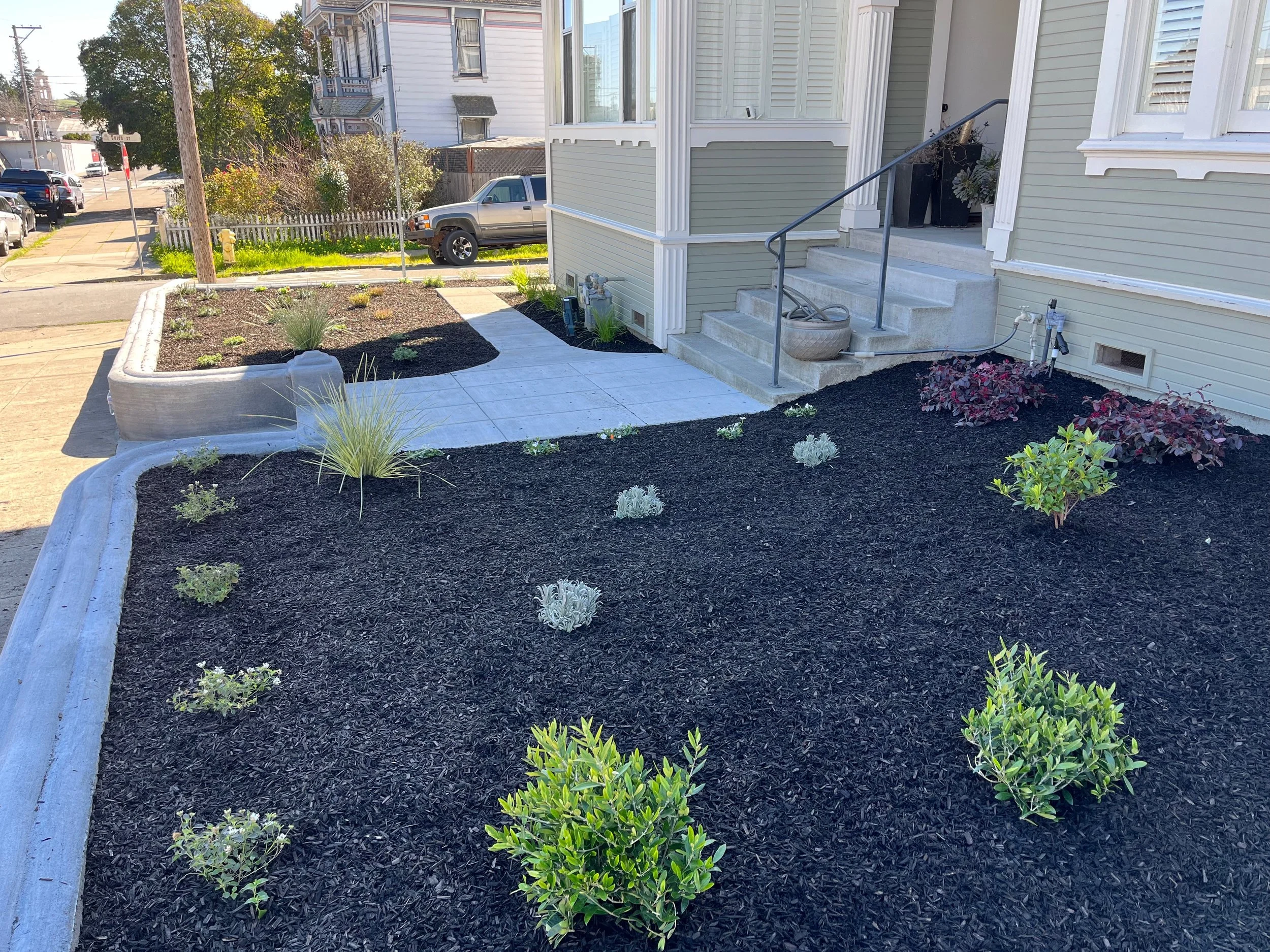
New landscape installation in West Petaluma, CA featuring low maintenance plantings installed with a drip irrigation system on an automatic smart controller.
The first few months after installation are critical for plant establishment. Newly planted trees, shrubs, perennials, and lawns have limited root systems and require consistent moisture while they adapt to their new environment.
During this stage, irrigation should focus on encouraging healthy root development without oversaturating the soil.
Key priorities include:
Watering small plants frequently enough to keep the root zone consistently moist.
Providing deep watering for newly planted trees to encourage roots to grow into the surrounding soil.
Monitoring soil moisture regularly, especially during Sonoma County’s hot, dry summers.
Preventing standing water, which can lead to root rot and other moisture-related diseases.
Because young plants dry out more quickly, irrigation systems are typically programmed to run more frequently during the establishment period.
Stage 2: The Establishment Phase (Approximately 3–24 Months)
As plants begin producing healthy new growth, they enter the establishment phase. During this period, irrigation strategies should gradually change to promote stronger, deeper root systems.
Rather than watering often, irrigation events become less frequent but last longer, allowing moisture to penetrate deeper into the soil.
During this phase:
Watering frequency is reduced while irrigation duration increases.
Trees continue expanding their root systems and may require one to two years to become fully established.
Shrubs and perennials generally establish more quickly but still benefit from deep, consistent watering.
Irrigation schedules should be adjusted throughout the seasons to account for changing temperatures and rainfall.
This is often the point when irrigation systems require their first significant adjustments. A landscape should never remain on the same watering schedule it had immediately after installation.
Stage 3: Irrigation for Mature Landscapes
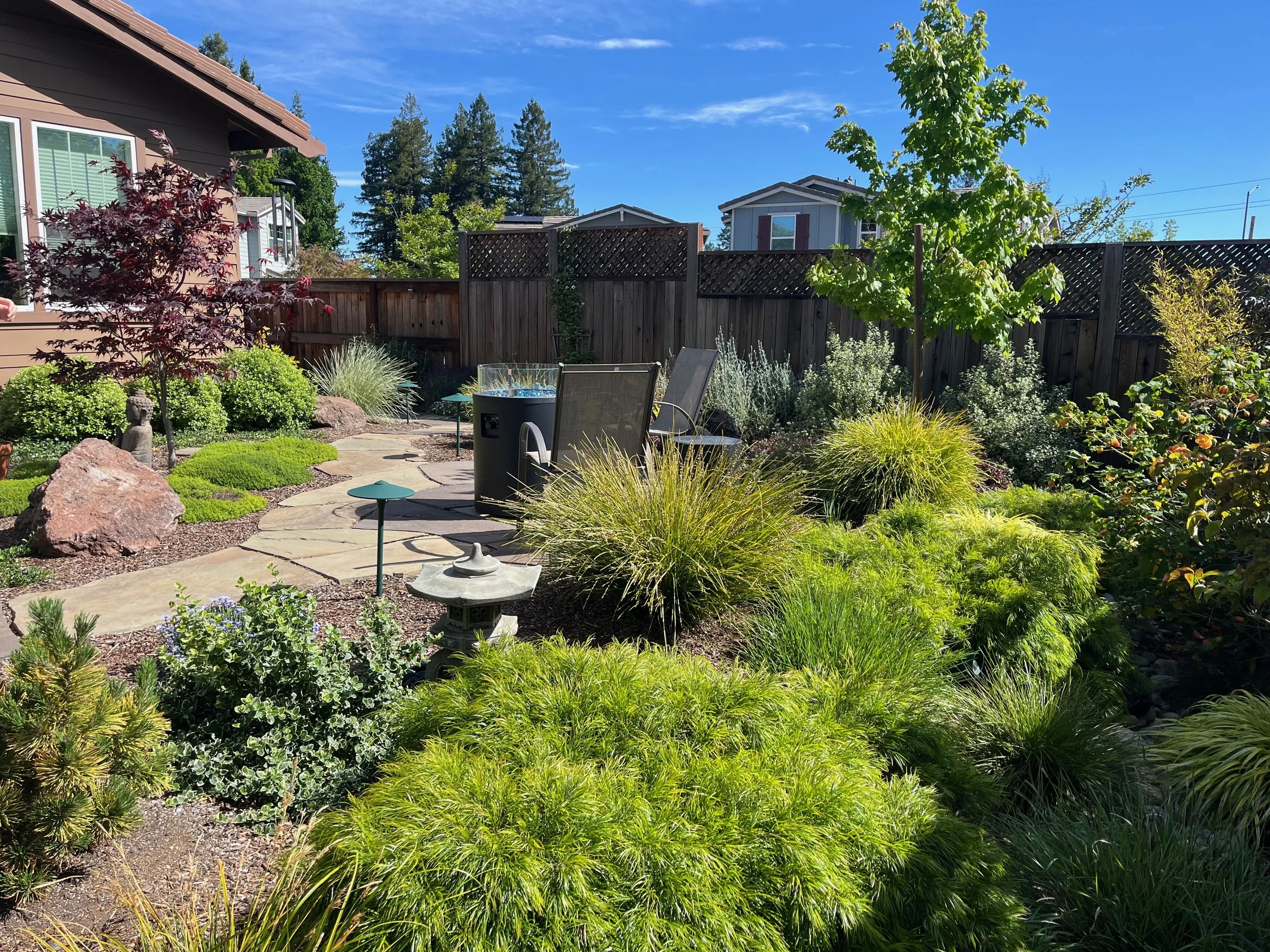
Japanese style garden featuring asian style plants and trees installed on a fully automatic drip irrigation system with a smart irrigation controller.
Once trees, shrubs, and ornamental plants become established, their water requirements decrease substantially. Mature plants develop deeper root systems that can access moisture stored within the soil, making them far less dependent on frequent irrigation.
At this stage, irrigation focuses on maintaining long-term plant health rather than supporting establishment.
A mature landscape benefits from:
Deep, infrequent watering that encourages strong root development.
Adjustments to irrigation zones as tree canopies expand and create additional shade.
Reduced watering for drought-tolerant and California-friendly plantings.
Seasonal scheduling changes based on weather conditions and plant performance.
One of the most common problems we encounter in established landscapes is overwatering. Excess moisture can damage roots, increase disease pressure, and shorten the lifespan of otherwise healthy plants.
Choosing the Right Irrigation System
Different irrigation methods serve different purposes, and each should be maintained as your landscape evolves.
Drip Irrigation
Drip irrigation is one of the most efficient watering methods for trees, shrubs, and planting beds because it delivers water directly to the root zone while minimizing evaporation.
As plants mature, drip systems should be updated by:
Moving emitters farther from expanding tree trunks.
Adding additional emitters to accommodate larger root systems.
Adjusting flow rates as plants require less frequent watering.
Spray Irrigation
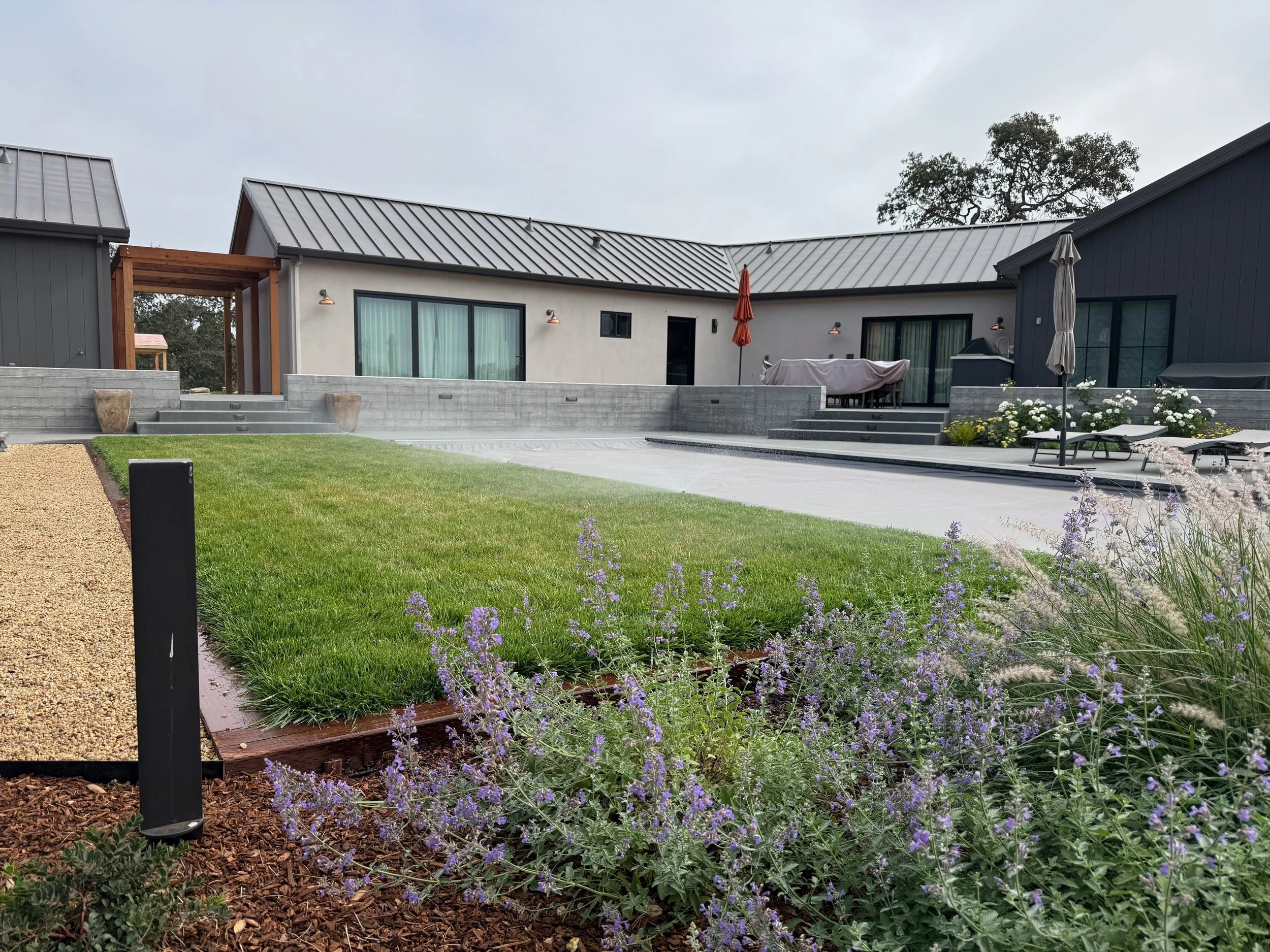
Modern lawn with sprinkler system in Windsor, CA.
Overhead spray systems are commonly used for lawns and large groundcover areas.
Routine maintenance should include:
Cleaning clogged nozzles.
Correcting overspray onto sidewalks and driveways.
Adjusting spray patterns as plants grow and landscape layouts change.
Annual inspections help maintain even coverage while reducing unnecessary water waste.
Smart Irrigation Controllers
Modern smart irrigation controllers make watering more efficient by automatically responding to changing weather conditions.
These systems can:
Reduce watering during periods of rainfall.
Increase irrigation during extreme heat.
Automatically adjust seasonal schedules.
Improve water efficiency while supporting healthier landscapes.
For homeowners throughout Sonoma County, smart controllers are an excellent investment that helps conserve water without sacrificing plant health.
Why Regular Irrigation Adjustments Matter
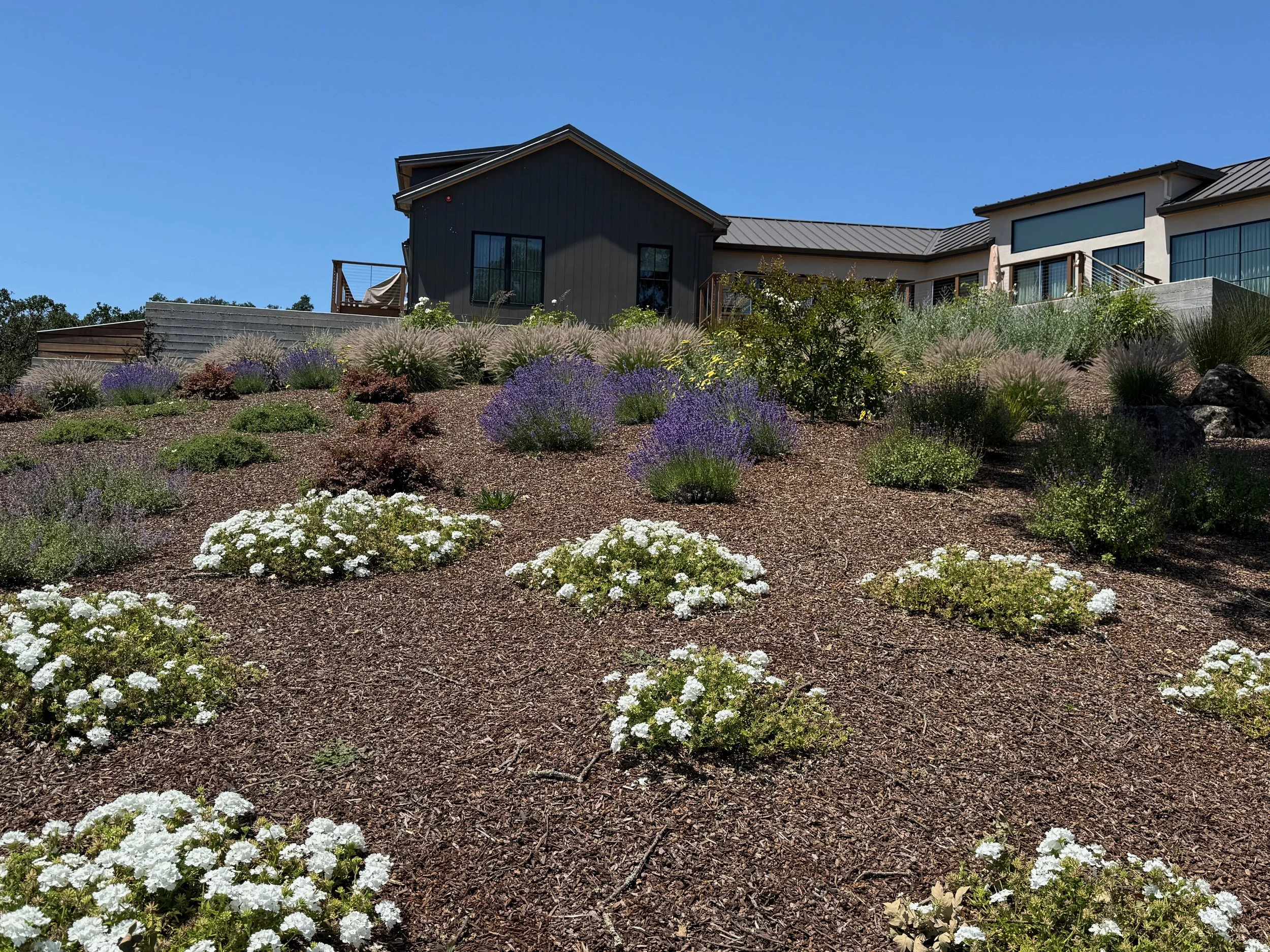
Full sun hillside garden with drought tolerant plants requires less water than typical shade garden.
A newly installed landscape may require irrigation four to six days each week. Once the same landscape is fully established, watering may only be necessary once or twice weekly—and drought-tolerant gardens often require even less.
Without periodic adjustments, irrigation systems can contribute to:
Root rot
Fungal diseases
Weak, shallow root systems
Plant stress during heat waves
Excessive water consumption
Higher monthly utility bills
Proper irrigation management protects both your landscape and your investment while promoting healthier, longer-lasting plants.
The Value of Professional Irrigation Audits
Landscapes are constantly changing, and irrigation systems should change with them. A professional irrigation inspection helps ensure every zone is operating efficiently and delivering the appropriate amount of water.
An irrigation audit can identify:
Overwatered and underwatered areas.
Broken or clogged drip emitters.
Needed adjustments as trees and shrubs mature.
Seasonal scheduling improvements.
Controller programming errors.
Opportunities to improve water efficiency.
We recommend scheduling irrigation evaluations twice each year—once in the spring and again in the fall—to keep your system performing at its best.
Keep Your Sonoma County Landscape Healthy for Years to Come
An effective irrigation system is the foundation of a healthy, sustainable landscape. By adjusting your watering practices as plants mature, maintaining your irrigation equipment, and taking advantage of modern water-saving technology, you can enjoy a landscape that remains vibrant through every season.
At Moonlight Landscapes, we design, install, and maintain efficient irrigation systems that are customized for Sonoma County’s Mediterranean climate. Whether you’re starting a new landscape project or upgrading an existing irrigation system, our experienced team can help create a watering plan that promotes healthier plants, conserves water, and protects your landscape investment for years to come.