
The Pros and Cons of Decomposed Granite for Landscaping in Sonoma County
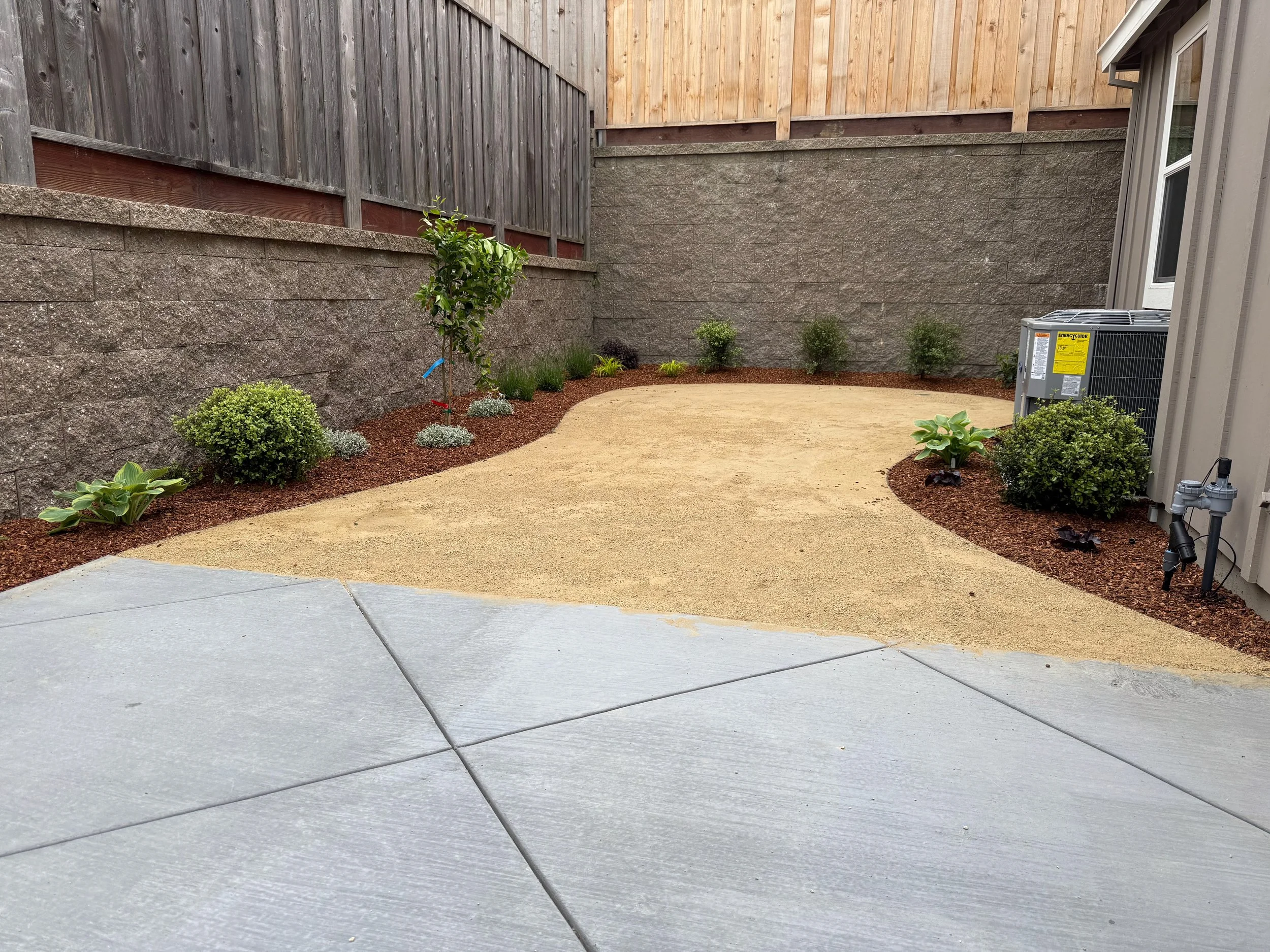
Decomposed granite garden patio with steel edging, drought-tolerant plants in a Sonoma County residential landscape.
Decomposed granite (DG) has become one of the most popular hardscape materials for homeowners throughout Sonoma County. Its natural appearance, affordability, and excellent drainage make it an ideal choice for drought-tolerant landscapes, garden paths, patios, and modern outdoor living spaces. Whether you’re designing a contemporary backyard in Santa Rosa, a rustic garden in Healdsburg, or a Mediterranean-inspired landscape in Petaluma, decomposed granite offers a timeless aesthetic that blends beautifully with Northern California’s environment.
Like any landscape material, however, decomposed granite has both advantages and limitations. Understanding the pros and cons can help you determine whether it’s the right fit for your outdoor space.
What Is Decomposed Granite?
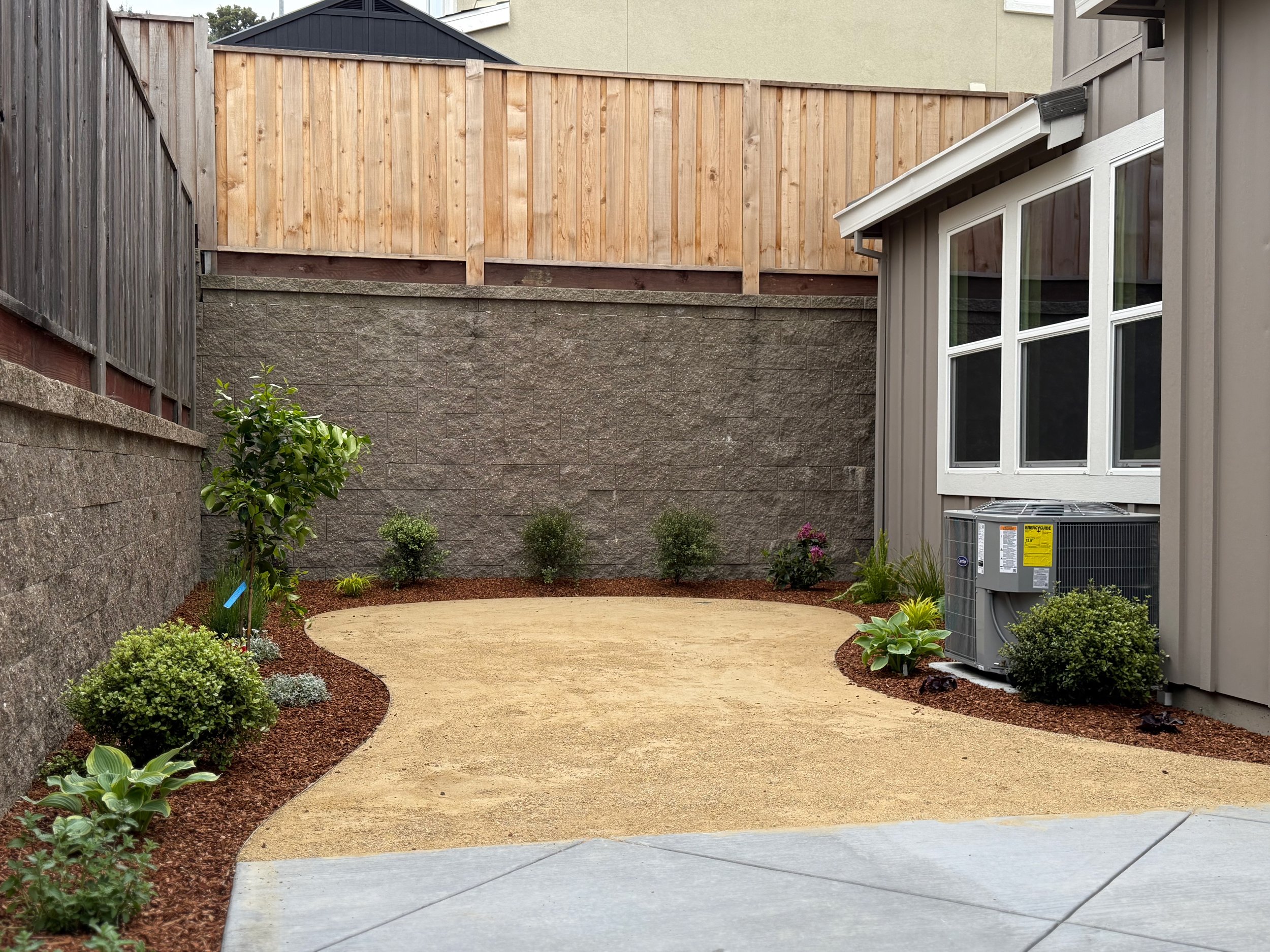
Decomposed granite is a finely crushed stone created through the natural weathering of granite rock. Available in a variety of earth-tone colors—including gold, tan, gray, and reddish hues—it compacts into a stable surface while maintaining a natural, organic look.
Depending on the project, DG can be installed as loose material or with stabilizing additives that create a firmer, more durable surface.
Common applications include:
Garden pathways
Courtyards
Seating areas
Fire pit spaces
Xeriscape and drought-tolerant landscapes
Decorative ground cover
Residential driveways with light vehicle traffic
Benefits of Decomposed Granite
1. Natural Beauty That Complements the Landscape
One of decomposed granite’s greatest strengths is its ability to blend seamlessly into the surrounding environment. Unlike poured concrete or manufactured pavers, DG creates a softer, more natural appearance that enhances the landscape without overpowering it.
It pairs especially well with:
Native California plants
Decorative boulders
Succulent gardens
Mediterranean landscapes
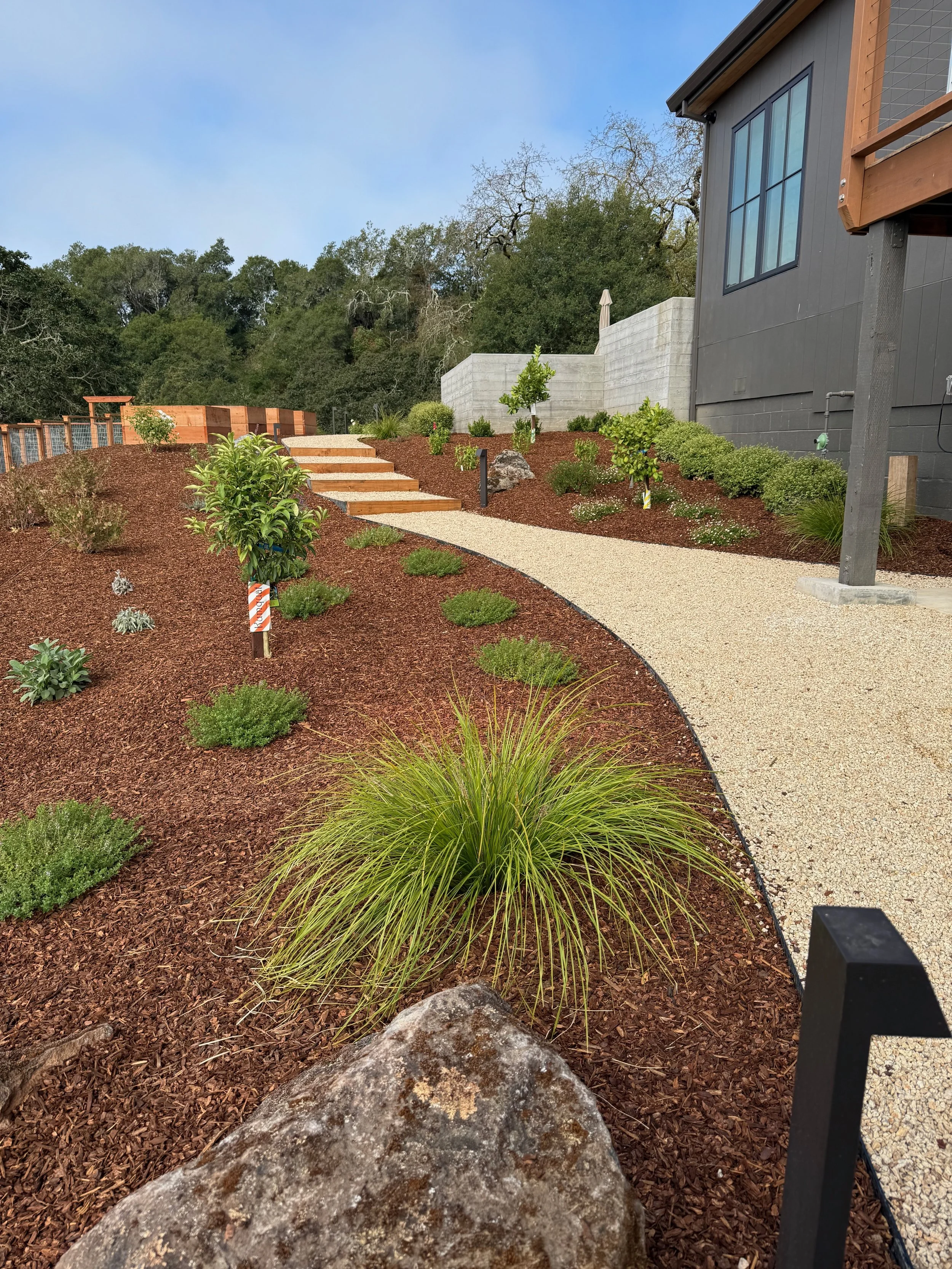
A decomposed granite pathway creates a durable, natural-looking walkway that complements drought-tolerant landscaping and outdoor living spaces in Sonoma County.
The result is a landscape that feels relaxed, elegant, and connected to the natural beauty of Sonoma County.
2. Budget-Friendly Hardscape Solution
For homeowners looking to maximize their landscaping budget, decomposed granite is one of the most cost-effective hardscape materials available.
Compared to natural stone, pavers, or stamped concrete, DG generally offers:
Lower material costs
Faster installation
Reduced labor expenses
Affordable long-term improvements
This makes it an excellent option for large pathways, patios, and expansive garden spaces.
3. Excellent Drainage and Permeability
Water conservation and stormwater management are increasingly important throughout California.
Because decomposed granite is permeable, rainwater naturally filters through the surface instead of running off into streets and storm drains.
Benefits include:
Improved drainage
Reduced puddling
Less surface runoff
Better groundwater recharge
Environmentally friendly landscape design
These qualities make DG particularly well-suited for Sonoma County’s Mediterranean climate.
4. Perfect for Water-Wise Landscaping
Unlike traditional lawns, decomposed granite requires no irrigation.
When combined with drought-tolerant plants and efficient irrigation systems for surrounding planting areas, DG helps reduce overall water usage while maintaining an attractive outdoor environment.
It works beautifully in:
Xeriscapes
California native gardens
Modern landscapes
Low-maintenance front yards
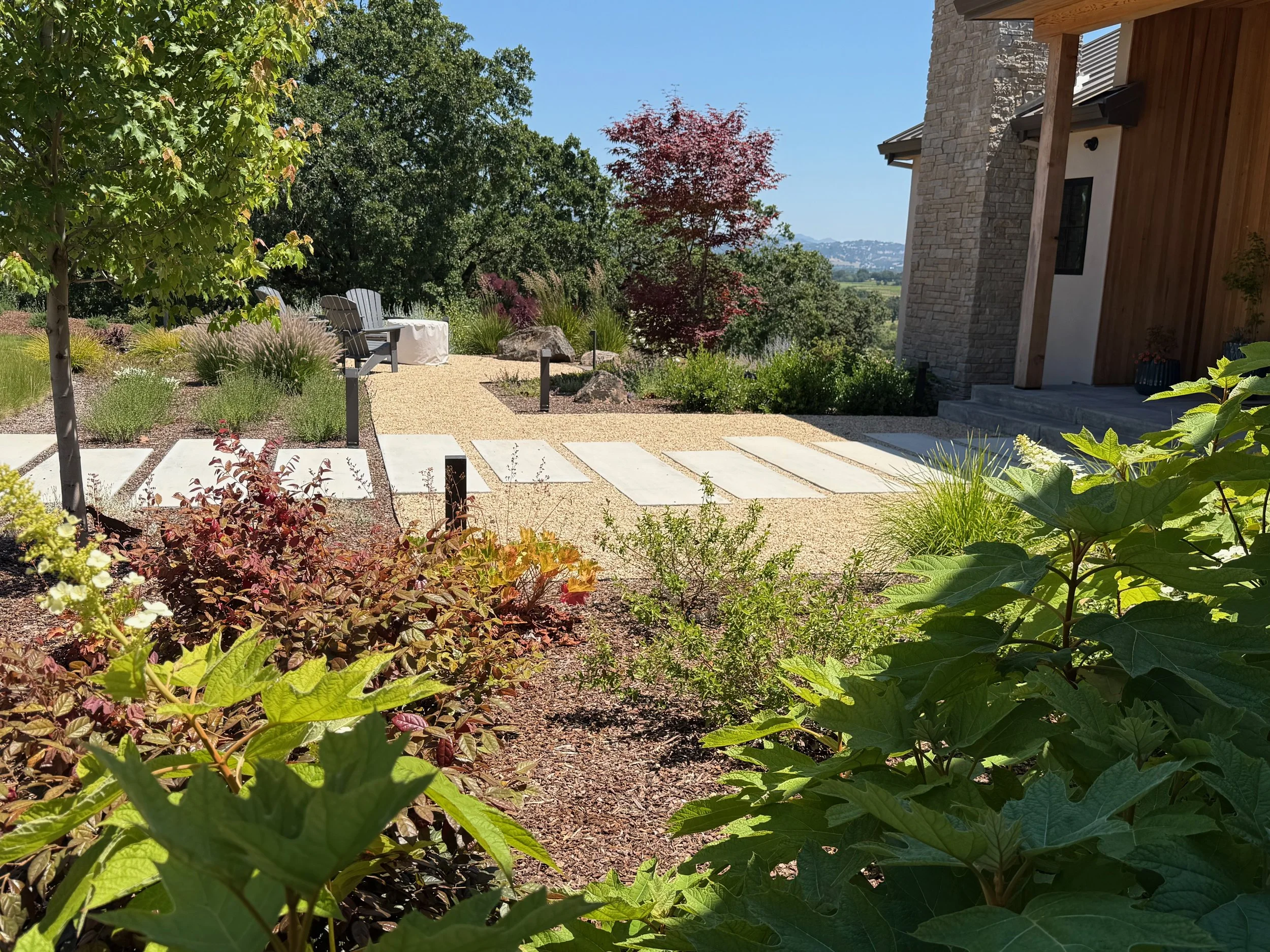
Decomposed granite garden pathway with natural stone edging, drought-tolerant plants, and decorative boulders in a Sonoma County residential landscape.
5. Design Flexibility
Because decomposed granite is installed and compacted on-site, it easily adapts to curved layouts and organic landscape designs.
Designers often use DG to create:
Meandering garden paths
Informal patios
Tree surrounds
Courtyards
Natural transitions between planting beds and hardscape
Its versatility allows landscapes to feel more fluid and less rigid than those built entirely with concrete.
Drawbacks of Decomposed Granite
1. Proper Installation Is Essential
The longevity of decomposed granite depends almost entirely on proper installation.
Without adequate excavation, base preparation, edging, and compaction, problems can develop over time, including:
Surface erosion
Uneven settling
Material migration
Poor drainage
Weed growth
Working with an experienced landscape contractor helps ensure the surface remains stable and attractive for years.
2. Requires Periodic Maintenance
Although relatively low maintenance, decomposed granite is not maintenance-free.
Over time, homeowners should expect occasional:
Raking
Re-leveling
Additional top dressing
Re-compaction
Weed removal
Fortunately, these maintenance tasks are generally simple and inexpensive compared to repairing cracked concrete or replacing damaged pavers.
3. Not Designed for Heavy Vehicle Traffic
While decomposed granite performs exceptionally well for pedestrian areas, it may not be the best solution for locations subjected to constant vehicle traffic.
Heavy use can cause:
Tire ruts
Surface displacement
Compaction issues
For heavily used driveways or commercial applications, concrete or interlocking pavers may provide greater durability.
4. Fine Material Can Be Tracked Indoors
Because DG consists of fine crushed particles, some material may cling to shoes and be carried inside the home, particularly during wet weather.
Stabilized decomposed granite significantly reduces tracking but cannot eliminate it completely.
5. Surface Movement Over Time
Even a professionally installed decomposed granite surface will naturally experience minor movement due to:
Seasonal weather changes
Heavy rainfall
Frequent foot traffic
Tree root growth
Periodic maintenance helps restore the surface and maintain its finished appearance.
Is Decomposed Granite Right for Your Landscape?
Decomposed granite is an outstanding choice for homeowners looking to create beautiful, sustainable outdoor spaces without the cost of premium hardscape materials.
It is especially well suited for:
Garden pathways
Informal patios
Courtyards
Low-water landscapes
Natural garden designs
However, homeowners seeking a completely maintenance-free surface or planning for heavy vehicle traffic may benefit from alternative materials such as pavers or concrete.
Many of the most successful landscape designs combine decomposed granite with complementary hardscape features like natural stone edging, decorative boulders, concrete borders, or paver accents to create an outdoor space that balances beauty, durability, and functionality.
Enhance Your Sonoma County Landscape with Decomposed Granite
When thoughtfully designed and professionally installed, decomposed granite offers an attractive, environmentally friendly, and budget-conscious solution for a wide variety of landscape projects. Its natural appearance, permeability, and versatility make it an excellent fit for Sonoma County’s climate and outdoor lifestyle.
At Moonlight Landscapes, we specialize in designing and installing custom landscapes that combine high-quality materials with expert craftsmanship. Whether you’re planning a winding garden path, a welcoming courtyard, or a complete backyard transformation, our team can help determine if decomposed granite is the right choice for your property and ensure it performs beautifully for years to come.