
Fire-Safe Landscape Design in Santa Rosa, California
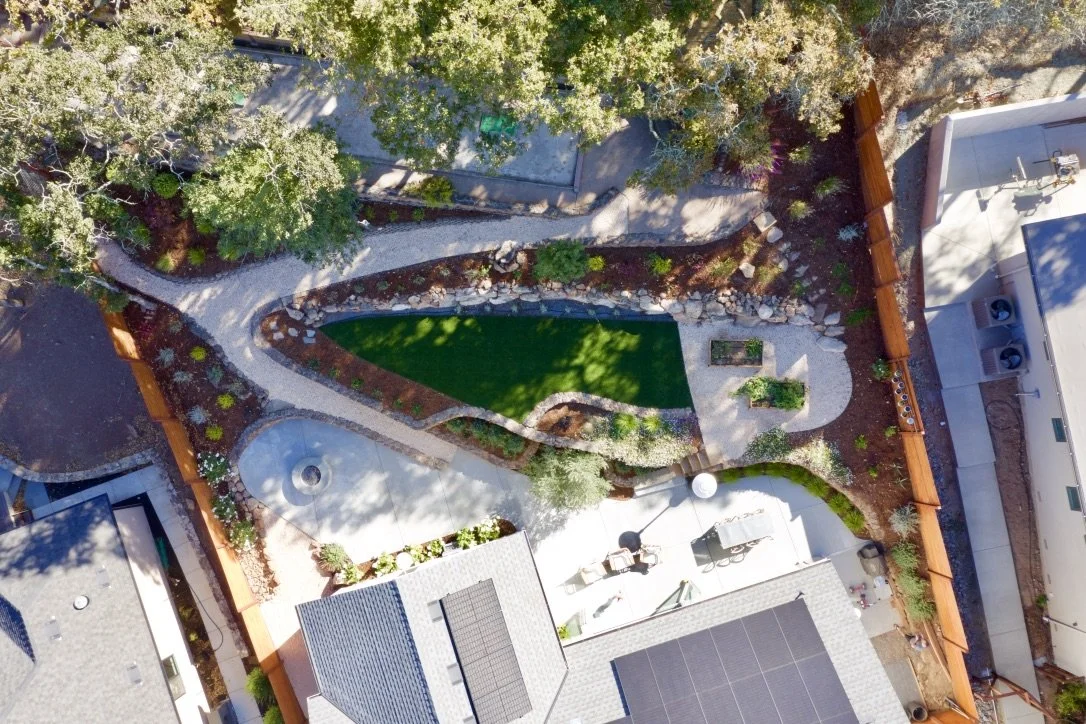
Fire-safe landscape design can help reduce wildfire risk around Santa Rosa and Sonoma County homes using defensible space, hardscape, thoughtful planting, irrigation, and ongoing maintenance.
Wildfire safety has become an important consideration when designing and maintaining landscapes in Santa Rosa and throughout Sonoma County. Hot, dry summers, seasonal winds, and periods of low humidity can create conditions where vegetation and other combustible materials contribute to wildfire risk.
At Moonlight Landscapes in Santa Rosa, California, we design and install landscapes that combine beauty, functionality, water efficiency, and wildfire-conscious design. Through thoughtful plant placement, defensible space, hardscape, irrigation, and ongoing vegetation management, homeowners can create attractive outdoor spaces while reducing potential fuel around their homes.
What Is Fire-Safe Landscaping?
Fire-safe landscaping, sometimes called fire-wise or wildfire-resilient landscaping, focuses on reducing combustible material and interrupting potential pathways that could allow fire to move toward a structure.
An effective design may incorporate:
Proper plant selection and spacing
Removal of dead and highly combustible vegetation
Gravel, stone, concrete, and other noncombustible materials
Separation between groups of plants
Regular seasonal cleanup
No landscape can eliminate wildfire risk, but thoughtful design and maintenance can help make a property more resilient.
Why Wildfire-Conscious Landscaping Matters in Santa Rosa
Santa Rosa and surrounding Sonoma County communities have experienced the devastating effects of wildfire firsthand. For homeowners in areas exposed to wildfire risk, the landscape surrounding the home deserves careful consideration.
Vegetation, wood mulch, fences, decks, stored materials, and other combustible elements can potentially contribute to fire spread.
A thoughtfully designed landscape can help:
Reduce combustible vegetation around structures
Create separation between potential fuel sources
Improve access around the property
Incorporate noncombustible landscape areas
Maintain healthier, properly spaced vegetation
Create an attractive landscape appropriate for Northern California
Defensible Space Around Your Home
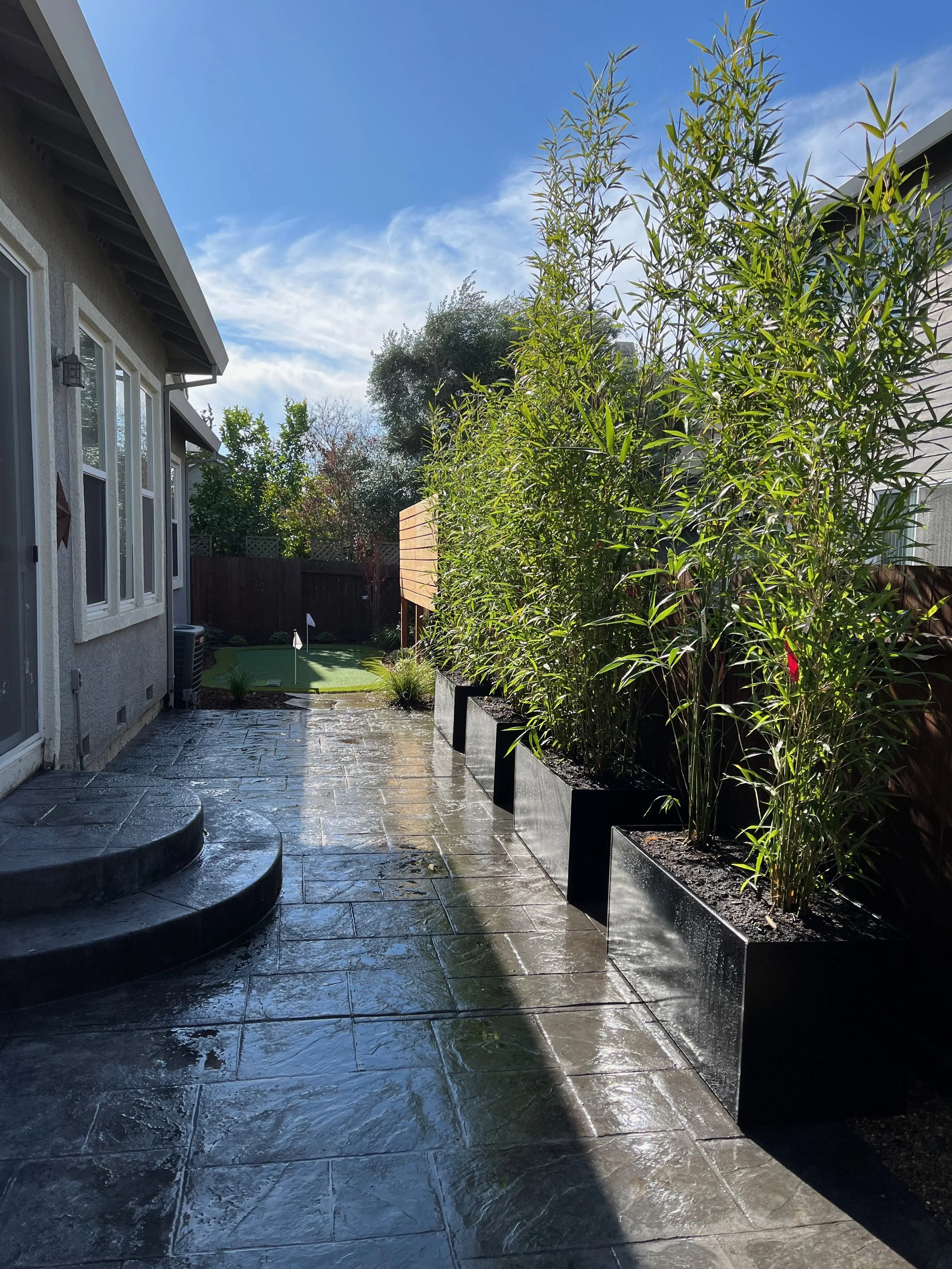
Defensible space is the area surrounding a structure where vegetation and other combustible materials are managed to help reduce wildfire risk.
Defensible space is the area surrounding a structure where vegetation and other combustible materials are managed to help reduce wildfire risk.
The area immediately adjacent to the home deserves particular attention. Gravel, stone, concrete, and other noncombustible materials can be incorporated near structures to reduce vegetation and combustible landscape materials.
Farther from the home, plants can be strategically placed and maintained with appropriate separation. Trees and shrubs should be managed to reduce continuous vegetation that could potentially carry fire across the landscape.
As distance from the structure increases, vegetation management continues through pruning, thinning, removal of dead material, and management of grasses and other potential fuels.
Homeowners should always consult current California and local Sonoma County defensible-space requirements, as wildfire regulations and recommendations can change.
Choosing Plants for a Wildfire-Conscious Landscape
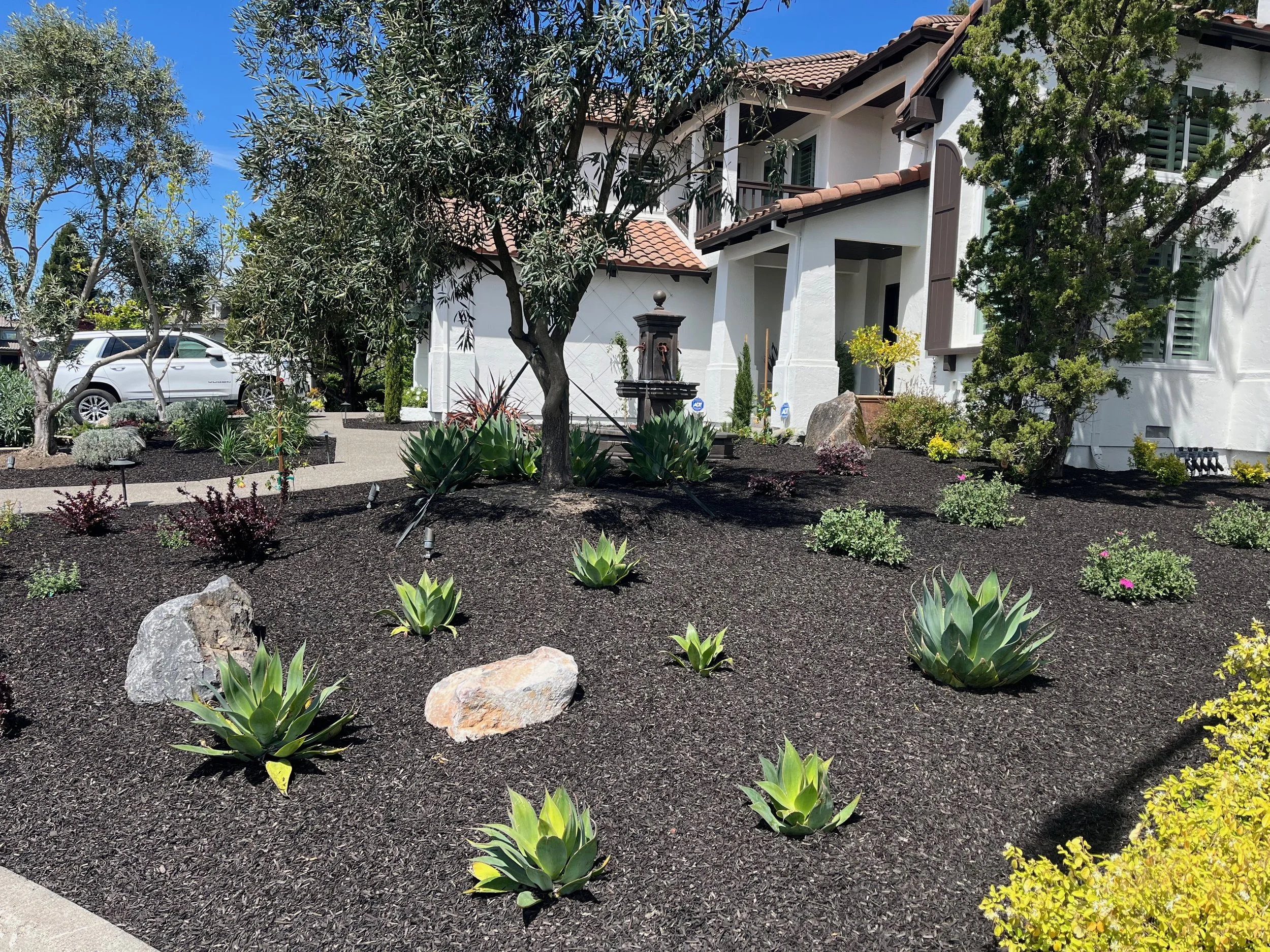
Plants should be selected according to the property’s exposure, irrigation needs, mature size, maintenance requirements, and proximity to structures.
There is no completely “fireproof” plant. How a plant is maintained, where it is located, its moisture content, and its relationship to surrounding vegetation can be just as important as the species itself.
For this reason, we focus on creating landscapes with appropriate plant placement, spacing, irrigation, and maintenance rather than relying solely on a list of supposedly fire-resistant plants.
Depending on the site and design, a wildfire-conscious planting plan might incorporate:
Low-growing groundcovers
Succulents
Selected California native plants
Ornamental grasses used appropriately
Low-water shrubs and perennials
Properly spaced specimen plants and trees
Plants should be selected according to the property’s exposure, irrigation needs, mature size, maintenance requirements, and proximity to structures.
Using Hardscape to Reduce Landscape Fuel
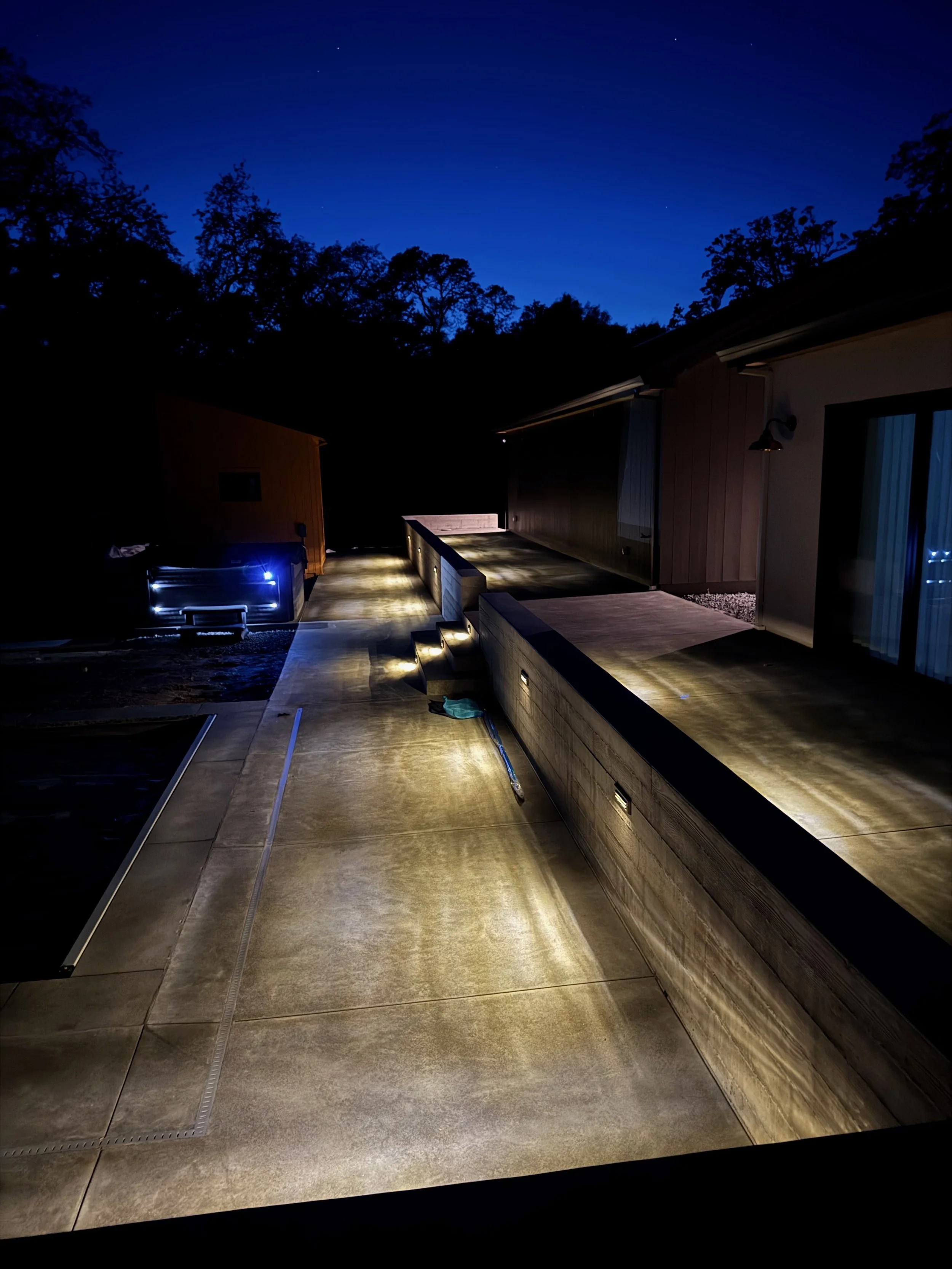
Hardscape is especially valuable in wildfire-conscious landscape design because it can create attractive areas with little or no combustible vegetation.
Hardscape is especially valuable in wildfire-conscious landscape design because it can create attractive areas with little or no combustible vegetation.
Hardscape features can include:
Concrete patios and walkways
Stone staircases
Retaining walls
Gravel planting areas
Masonry and natural stone features
Strategically positioned patios, pathways, walls, and gravel areas can help create separation between planting zones while also improving circulation and outdoor living space.
The result doesn’t have to look barren. Natural stone, Sonoma Fieldstone boulders, decorative gravel, and carefully positioned plants can create a beautiful landscape with strong visual interest.
Irrigation & Plant Health
Healthy plants that receive appropriate irrigation are an important part of maintaining a well-managed landscape.
Moonlight Landscapes designs and installs drip irrigation systems that deliver water efficiently to planting areas while helping reduce unnecessary water use.
Irrigation should be designed around plant type, exposure, soil conditions, and seasonal requirements. As landscapes mature, irrigation systems should also be periodically inspected and adjusted.
Maintenance Is Essential
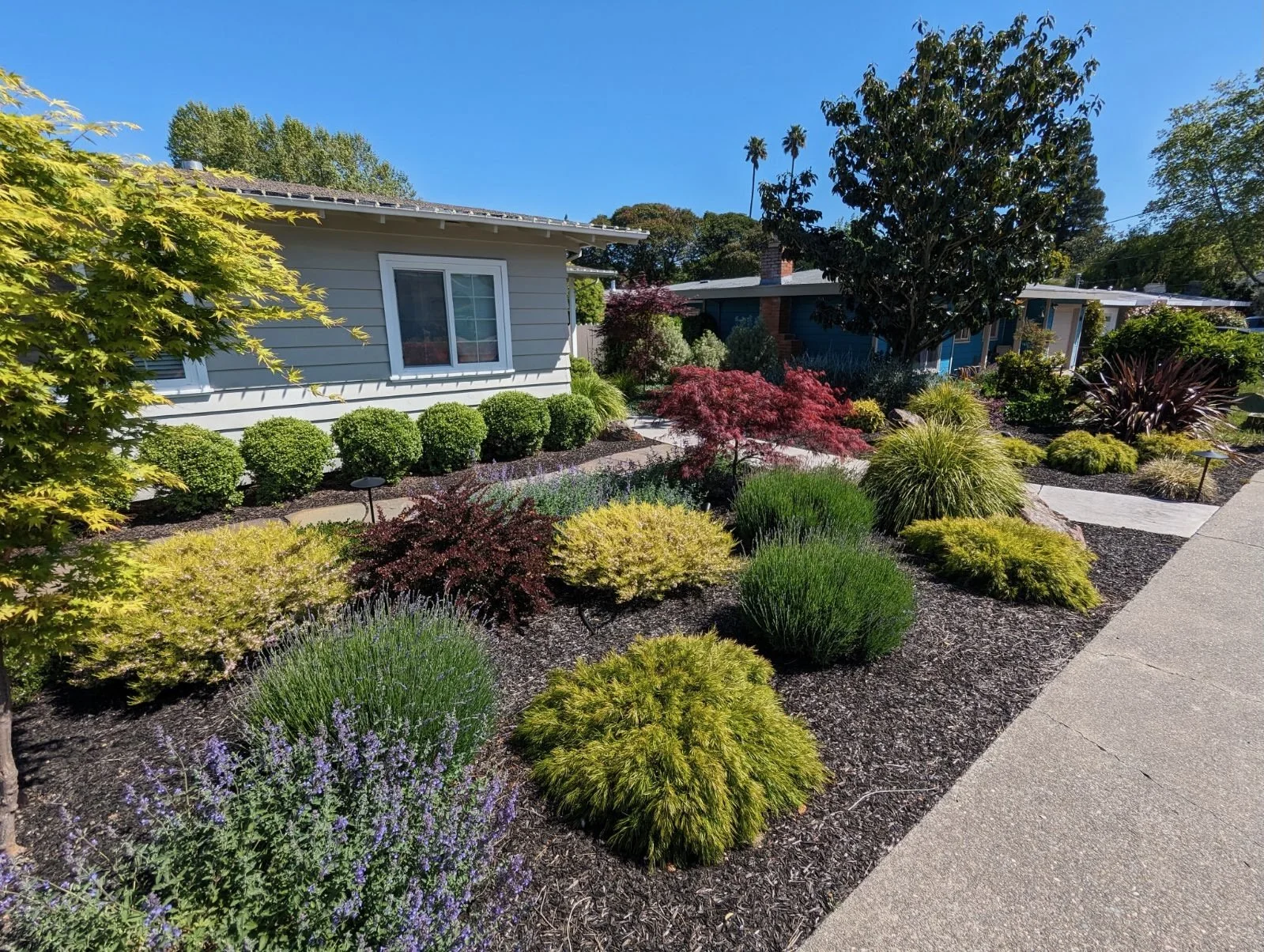
Landscape maintenance is particularly important before and during Sonoma County’s dry season.
Even a thoughtfully designed landscape can become a wildfire concern if it isn’t maintained.
Important maintenance practices include:
Removing dead leaves, branches, and plant material
Managing weeds and grasses
Removing dead or declining plants
Maintaining appropriate plant spacing
Clearing accumulated debris
Inspecting irrigation systems
Managing vegetation as plants mature
Landscape maintenance is particularly important before and during Sonoma County’s dry season.
Fire-Safe Doesn’t Have to Mean Bare
One misconception about wildfire-conscious landscaping is that the property must be stripped of vegetation.
Thoughtful landscape design can create separation and defensible space while still providing color, texture, shade, seasonal interest, and attractive outdoor living areas.
A successful design might combine native and low-water plantings, natural boulders, decorative gravel, stonework, concrete, pathways, and carefully positioned trees and shrubs.
The goal is a landscape that feels intentional and connected to the surrounding environment while considering the realities of living in wildfire-prone Northern California.
Fire-Safe Landscape Design & Installation in Santa Rosa
At Moonlight Landscapes, we provide landscape design and installation services throughout Santa Rosa and Sonoma County.
We can incorporate wildfire-conscious design principles into new landscapes and re-landscape existing properties using hardscape, native and low-water plantings, drip irrigation, natural stone, boulders, pathways, and thoughtful plant spacing.
Every property is different, and wildfire risk depends on many factors beyond landscaping. Our goal is to create beautiful, functional outdoor spaces while incorporating responsible landscape practices appropriate for Northern California.
Considering a new landscape or re-landscape in Santa Rosa? Contact Moonlight Landscapes to discuss a landscape designed around your property, lifestyle, and the Sonoma County environment.
Moonlight Landscapes | Landscape Design + Build | Santa Rosa, California | Serving Sonoma County