
Designing With Nature: Dry Creek Beds in Sonoma County Landscapes
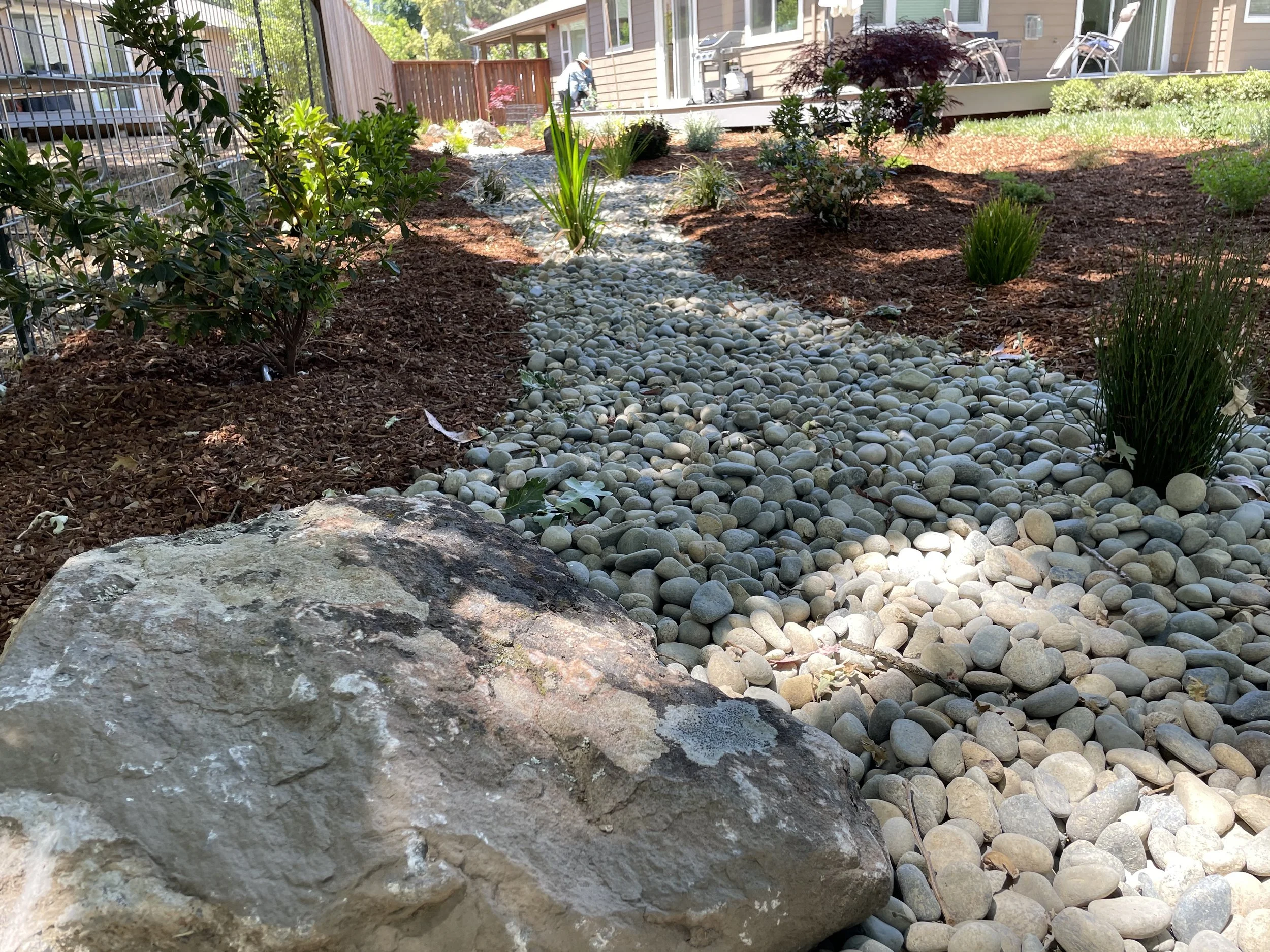
A natural dry creek bed winds through a Sonoma County landscape, surrounded by Sonoma Fieldstone boulders, ornamental grasses, and low-water plantings designed to complement the property’s natural terrain.
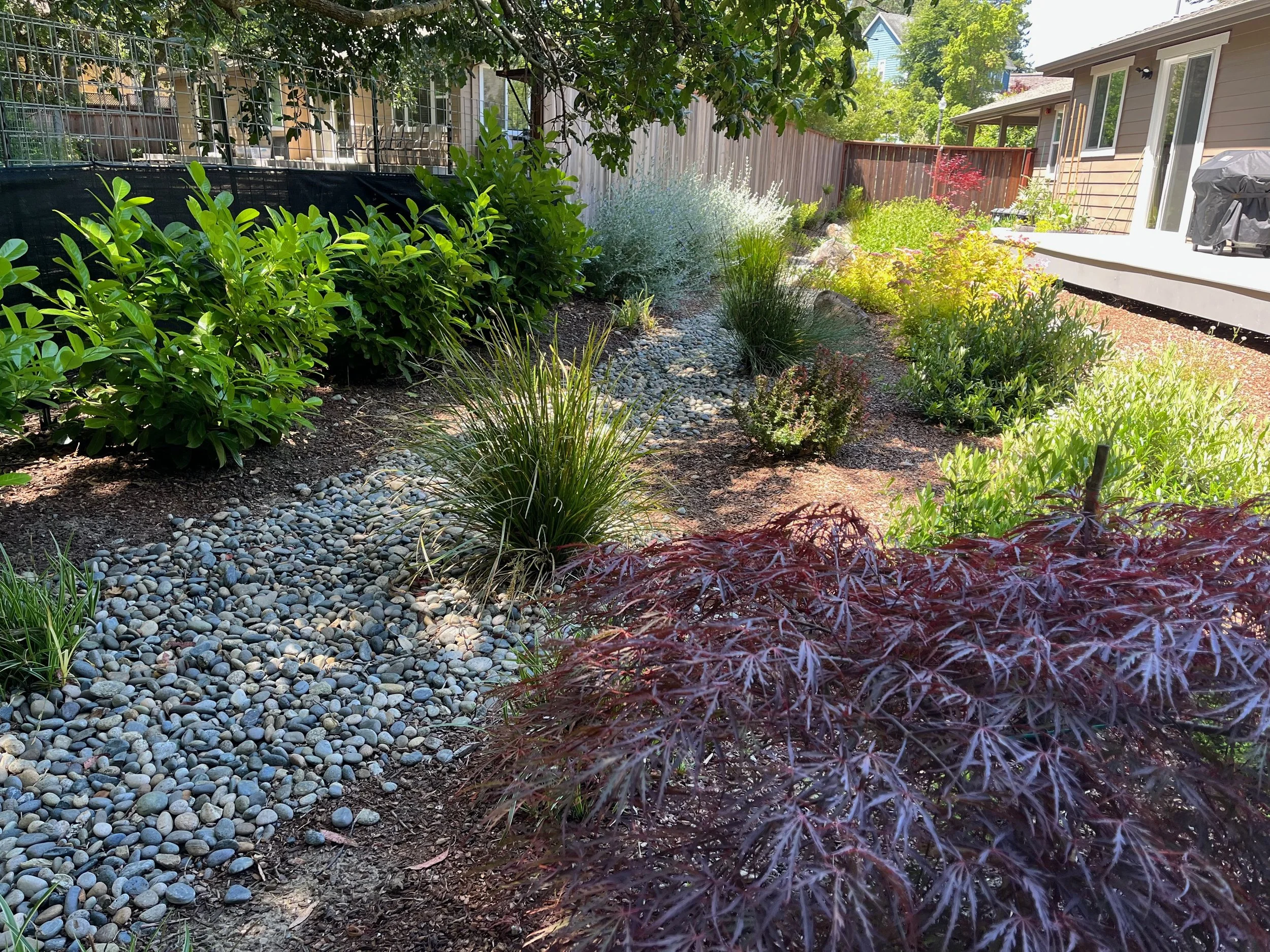
Some of the best landscape designs don’t fight the natural characteristics of a property—they work with them.
Some of the best landscape designs don’t fight the natural characteristics of a property—they work with them.
Throughout Sonoma County, properties often feature slopes, changing elevations, seasonal drainage, mature trees, and naturally occurring stone. At Moonlight Landscapes, we look for ways to incorporate these existing conditions into the landscape rather than automatically trying to eliminate them.
One of our favorite ways to accomplish this is with a dry creek bed.
A thoughtfully designed dry creek bed can follow the natural contours of a property, help address drainage, connect different areas of the landscape, and create the appearance of a seasonal creek winding naturally through the garden.
What Is a Dry Creek Bed?
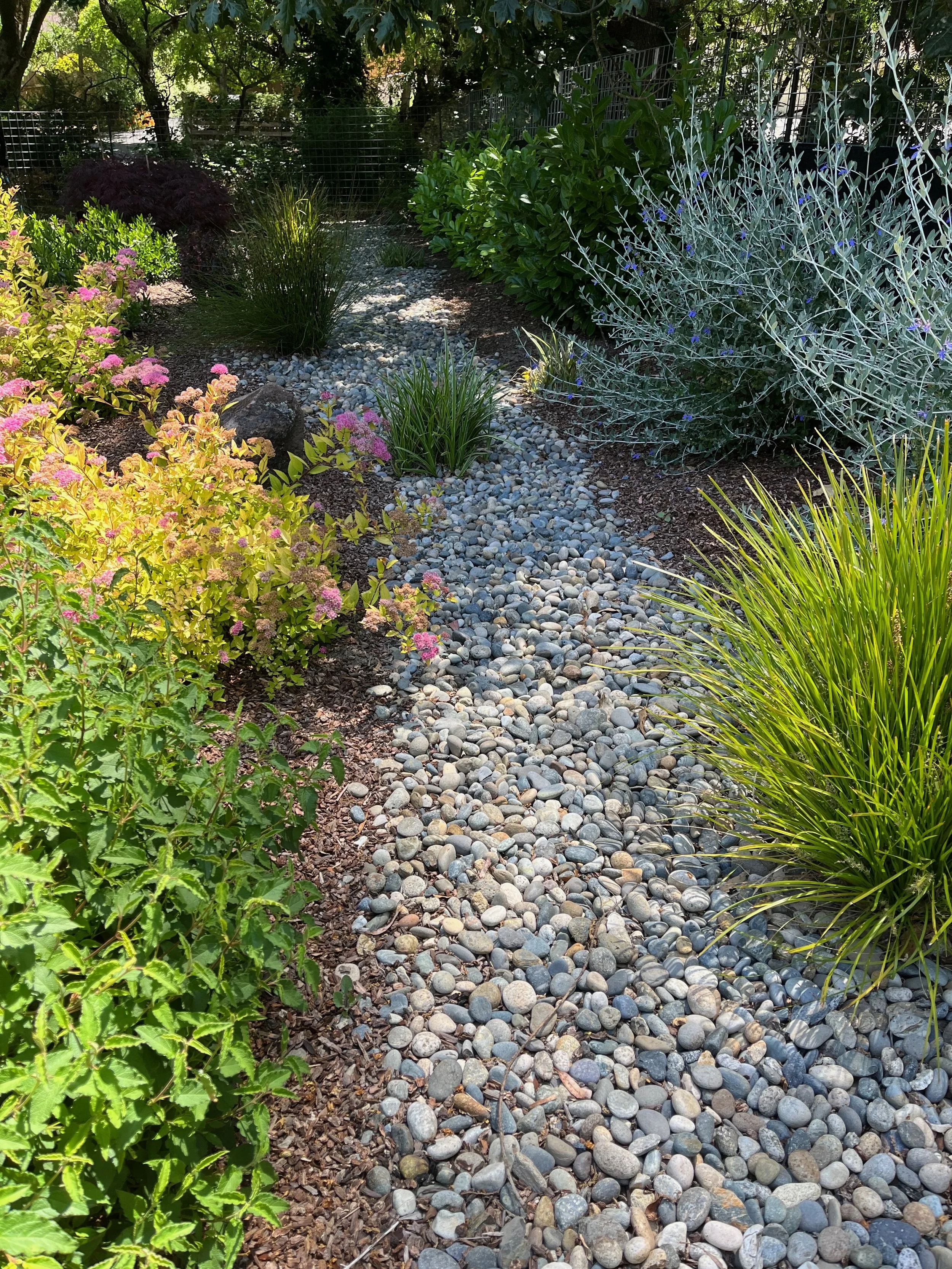
A dry creek bed is a landscape feature constructed with stone, gravel, boulders, and surrounding plantings to resemble a natural streambed.
A dry creek bed is a landscape feature constructed with stone, gravel, boulders, and surrounding plantings to resemble a natural streambed.
Depending on the property and drainage requirements, a dry creek bed may be primarily decorative or designed as part of a larger drainage solution.
Unlike a straight drainage ditch, a well-designed dry creek bed becomes an integral part of the landscape.
We often use a combination of:
Sonoma Fieldstone boulders
River rock and cobble
Decorative gravel
Native and low-water plants
Ornamental grasses
Japanese Maples and specimen trees
Natural elevation changes
The goal is to make the creek bed look as though it belongs on the property.
Following the Natural Flow of the Land
Nature rarely moves in perfectly straight lines.
Water follows elevation, moves around obstacles, widens and narrows, and creates organic patterns as it travels across the landscape.
We use these same principles when designing dry creek beds.
Instead of forcing a rigid feature into the property, we look at the existing slope and determine how a creek bed can meander naturally through the landscape.
On some properties, a dry creek bed might begin in the front yard, travel alongside the home, and continue into the backyard. On others, it may wind through a hillside planting area or connect separate garden spaces.
This creates movement and gives the landscape a visual connection from one area to the next.
Turning Drainage Into a Landscape Feature

Rather than simply moving water through underground pipes, a properly designed dry creek bed may help guide surface water through designated areas while creating the appearance of a natural watercourse.
Drainage is often viewed as something that needs to be hidden.
We see it differently.
When site conditions allow, drainage can become an opportunity to create one of the most interesting features in the landscape.
Rather than simply moving water through underground pipes, a properly designed dry creek bed may help guide surface water through designated areas while creating the appearance of a natural watercourse.
Boulders and varying stone sizes add texture, while surrounding plants soften the edges and help integrate the creek bed into the garden.
A functional necessity can become a focal point.
Using Sonoma Fieldstone Boulders
Boulders are one of the most important elements of a natural-looking dry creek bed.
At Moonlight Landscapes, we often incorporate Sonoma Fieldstone boulders because their natural character works beautifully with the landscapes of Sonoma County.
Placement is critical.
Rather than evenly spacing boulders along the edges, we position them in irregular groupings and partially integrate them into the surrounding grade. This helps the stone appear established within the landscape rather than simply placed on top of it.
Larger boulders can anchor bends in the creek, define transitions, and create focal points. Smaller stone and gravel then help connect these larger elements.
Planting Around a Dry Creek Bed
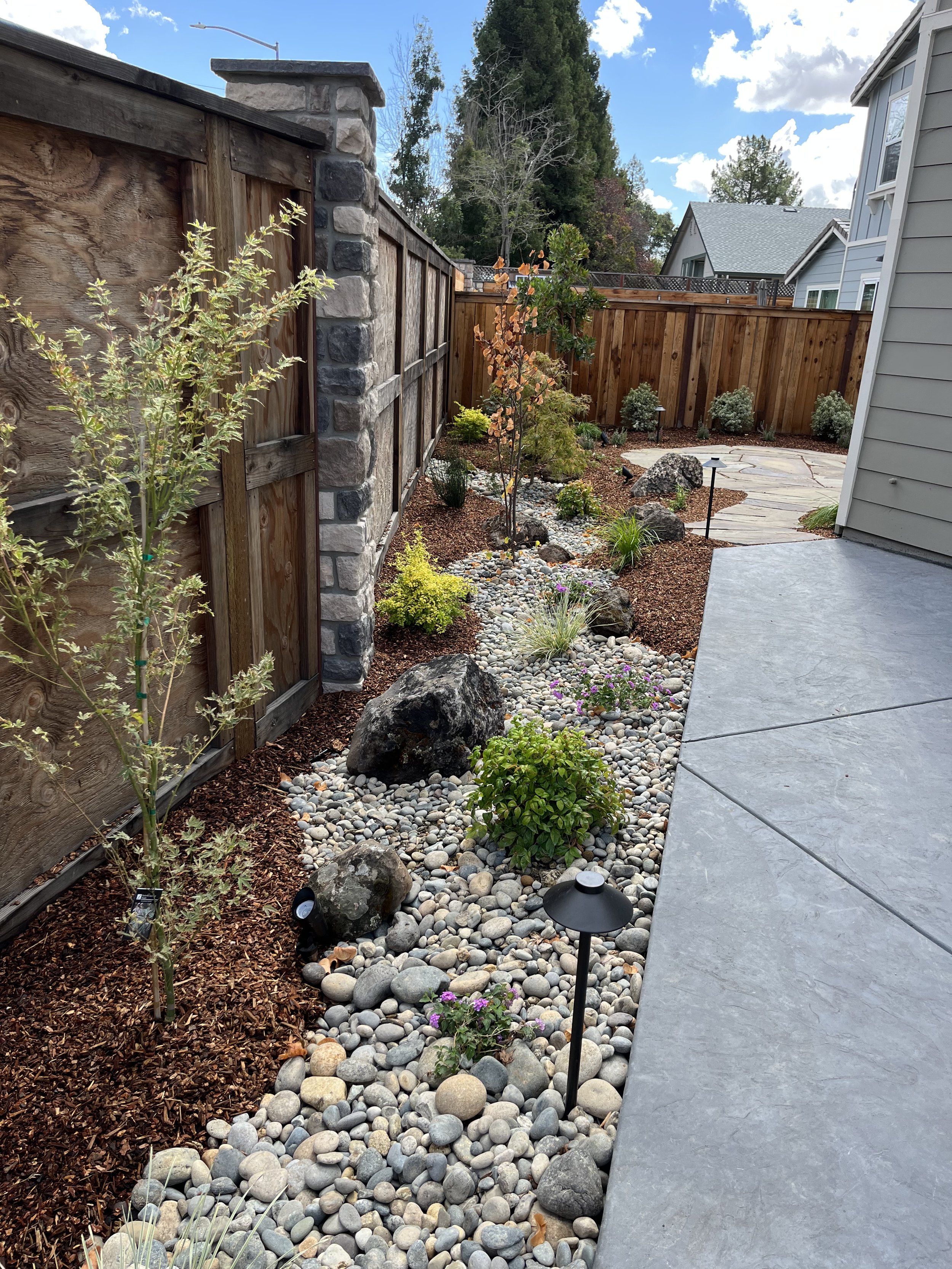
Planting around a dry creek bed should reinforce its natural shape without hiding it. We often use plants in informal groupings, allowing foliage to soften portions of the stone while leaving other areas exposed.
Plants are what transform a collection of rocks into a garden.
Planting around a dry creek bed should reinforce its natural shape without hiding it. We often use plants in informal groupings, allowing foliage to soften portions of the stone while leaving other areas exposed.
Depending on the landscape style and site conditions, plantings might include:
California native plants
Low-water perennials
Ornamental grasses
Groundcovers
Succulents
Japanese Maples
Selected shrubs and specimen plants
The combination of stone and planting creates contrast throughout the year.
Fine ornamental grasses can soften large boulders. Japanese Maples can provide height and seasonal color. Low-growing plants can spill toward the edges of the creek bed and make it feel established.
Designing Dry Creek Beds on Sloped Properties
Slopes are often treated as problems that need to be flattened or contained.
But a slope can also provide the perfect setting for a naturalistic dry creek bed.
Instead of completely reshaping the land, we can often use existing elevation changes as inspiration for the design. The creek bed can follow the contours of the property while boulders, stone, and planting areas help visually connect different elevations.
When combined with pathways, stone steps, gravel areas, and planting terraces, the slope becomes part of the experience of the landscape.
Significant drainage, erosion, or slope-stability concerns should always be evaluated appropriately for the individual property, but good landscape design begins by understanding how the land already behaves.
Connecting the Front Yard and Backyard
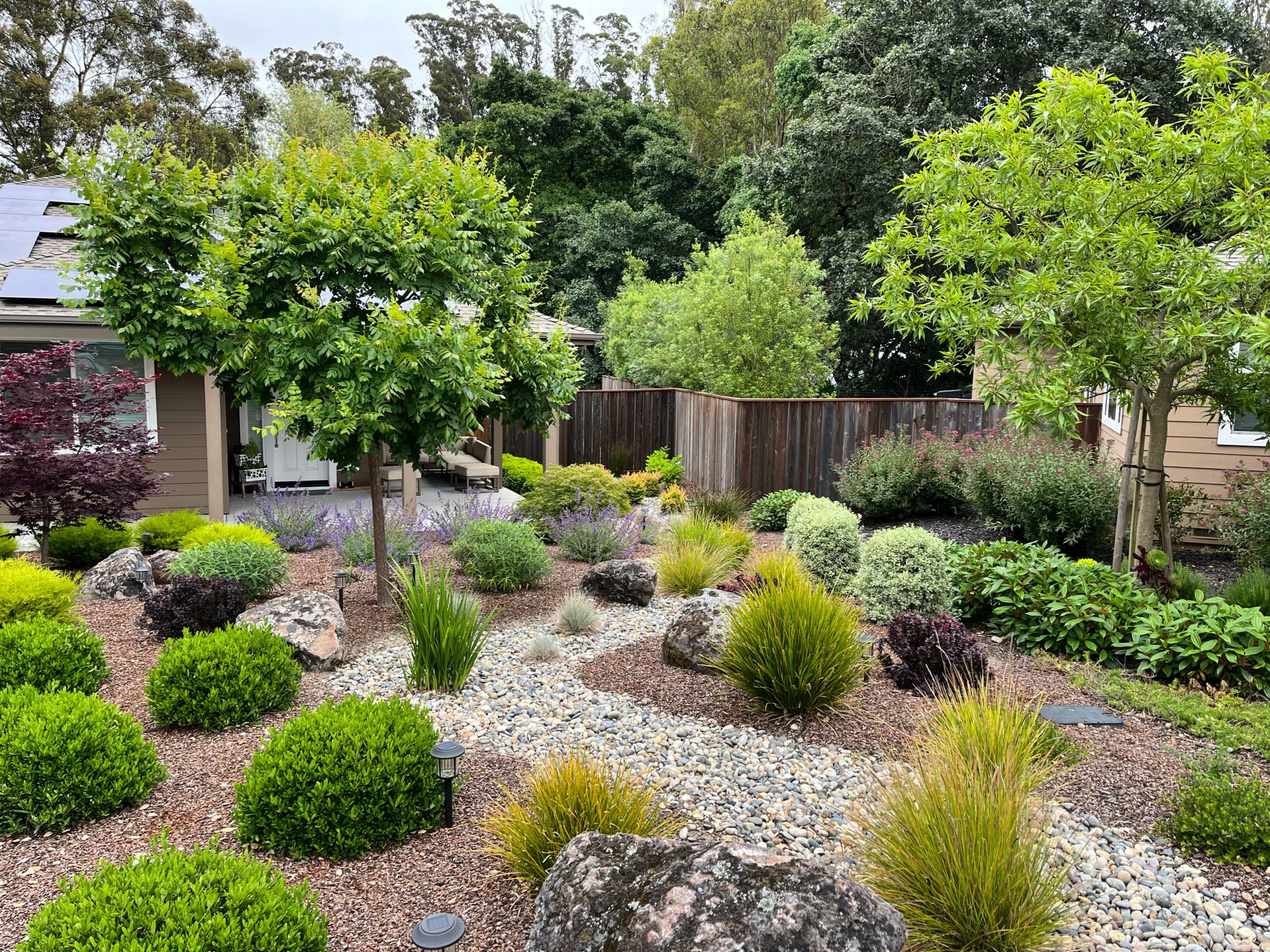
Instead of designing the front and backyard as completely separate spaces, a dry creek bed can become a recurring natural feature that visually connects the entire property.
Dry creek beds can also provide something that many landscapes are missing: continuity.
Instead of designing the front and backyard as completely separate spaces, a dry creek bed can become a recurring natural feature that visually connects the entire property.
Imagine a creek bed beginning near the front entry, meandering through native and low-water plantings, passing between Sonoma Fieldstone boulders, continuing along the side yard, and eventually opening into a backyard garden.
The materials and planting palette remain consistent, but the character of the creek changes as it moves through different spaces.
This creates a landscape that feels cohesive rather than assembled from unrelated features.
Combining Natural and Modern Landscape Design
A dry creek bed doesn’t require the entire landscape to have a rustic appearance.
Natural features can provide a beautiful contrast to modern landscape elements.
A flowing creek bed can move alongside a clean concrete walkway. Natural boulders can soften the edges of a modern patio. Ornamental grasses can contrast with rectangular concrete steps, while gravel transitions between structured and organic areas.
This combination of clean lines and natural forms works especially well in contemporary Sonoma County landscapes.
Low-Water Landscape Design
Dry creek beds also fit naturally into water-conscious landscapes.
Once established, the stone itself requires no irrigation, and surrounding planting areas can be designed using native, drought-tolerant, and low-water plants connected to an efficient drip irrigation system.
Gravel and stone can also replace portions of traditional high-water landscape areas while providing texture and visual interest.
The result is a landscape that embraces the dry character of Northern California rather than trying to recreate a landscape better suited to a different climate.
Designing a Landscape That Belongs
The most successful landscapes feel connected to their surroundings.
Instead of seeing slopes, drainage, boulders, and changing elevations only as obstacles, we look for ways to make them part of the design.
A dry creek bed captures this philosophy perfectly.
It follows the land rather than fighting it. It can transform drainage into a beautiful landscape feature. It creates movement, connects different areas of the property, and provides a natural setting for boulders and plants.
Most importantly, it can make a newly installed landscape feel as though it has always belonged there.
Dry Creek Bed Design & Installation in Sonoma County
At Moonlight Landscapes, we design and install custom landscapes throughout Santa Rosa and Sonoma County using natural materials and thoughtful design principles that respond to each individual property.
Our landscapes can incorporate dry creek beds, Sonoma Fieldstone boulders, native and low-water plants, Japanese Maples, gravel pathways, flagstone, stone staircases, drip irrigation, and low-voltage landscape lighting to create outdoor spaces that feel natural, functional, and connected.
If your property has slopes, drainage challenges, or an area that could benefit from a natural focal point, a custom dry creek bed may be an ideal addition.
Contact Moonlight Landscapes to start designing a Sonoma County landscape that works with nature—not against it.
Moonlight Landscapes | Landscape Design + Build | Santa Rosa, California | Serving Sonoma County