
Flagstone Pathways: Adding Natural Beauty and Character to Your Landscape
Written by Travis Bradley | Moonlight Landscapes | Santa Rosa, California
Flagstone pathways are one of our favorite ways to create movement, character, and a natural feel within a landscape. Unlike perfectly uniform concrete or manufactured pavers, natural flagstone brings variations in color, texture, shape, and size that allow a walkway to feel like it belongs in the garden.
At Moonlight Landscapes, we use flagstone pathways throughout landscapes in Santa Rosa, Petaluma, Windsor, Rohnert Park, Sebastopol, Healdsburg, and communities across Sonoma County. Whether incorporated into a native garden, used alongside a dry creek bed, or designed as a pathway connecting outdoor living areas, flagstone can provide both beauty and function.
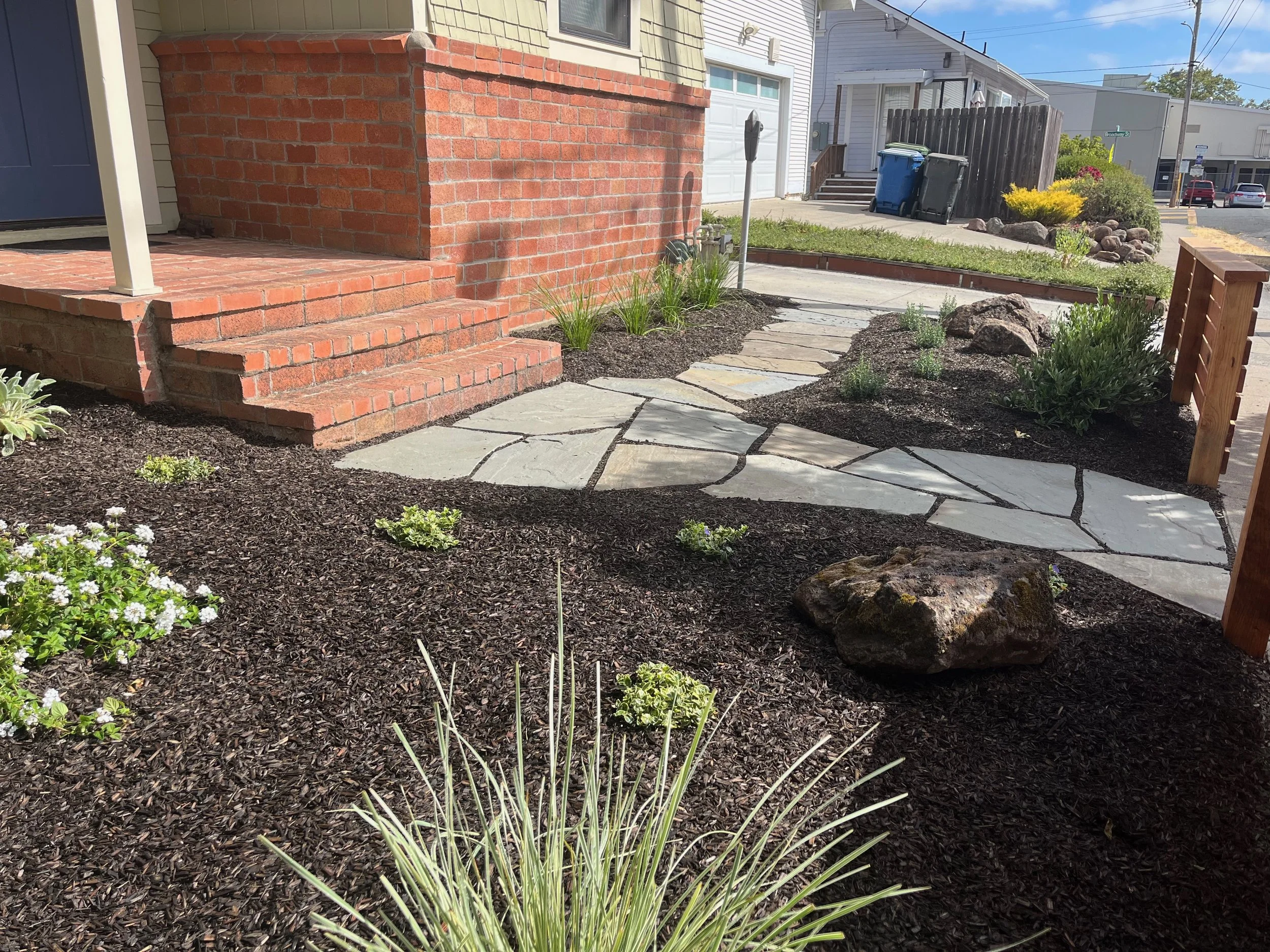
Because of its versatility, flagstone can complement everything from mature Sonoma County properties to newly constructed homes.
Why Choose Flagstone for a Landscape Pathway?
One of the biggest advantages of flagstone is its natural appearance. Every piece of stone is slightly different, giving the finished pathway a handcrafted look that is difficult to duplicate with manufactured materials.
Flagstone also works with many different landscape styles, including:
California native gardens
Mediterranean landscapes
Cottage gardens
Rustic and natural landscapes
Modern landscapes incorporating natural materials
Water-wise and drought-tolerant gardens
Because of its versatility, flagstone can complement everything from mature Sonoma County properties to newly constructed homes.
Creating Natural Movement Through the Garden
A pathway does more than provide a place to walk. It helps determine how people experience the landscape.
A gently curving flagstone pathway can guide visitors through planting areas while creating a sense of discovery. Instead of seeing the entire garden at once, the pathway encourages you to move through the landscape and experience different plants, textures, views, and outdoor spaces along the way.
Flagstone is particularly effective in curvilinear landscape designs, where irregular stone shapes complement the natural curves of planting beds, dry creek beds, boulders, and trees.
Flagstone and Sonoma Fieldstone Boulders
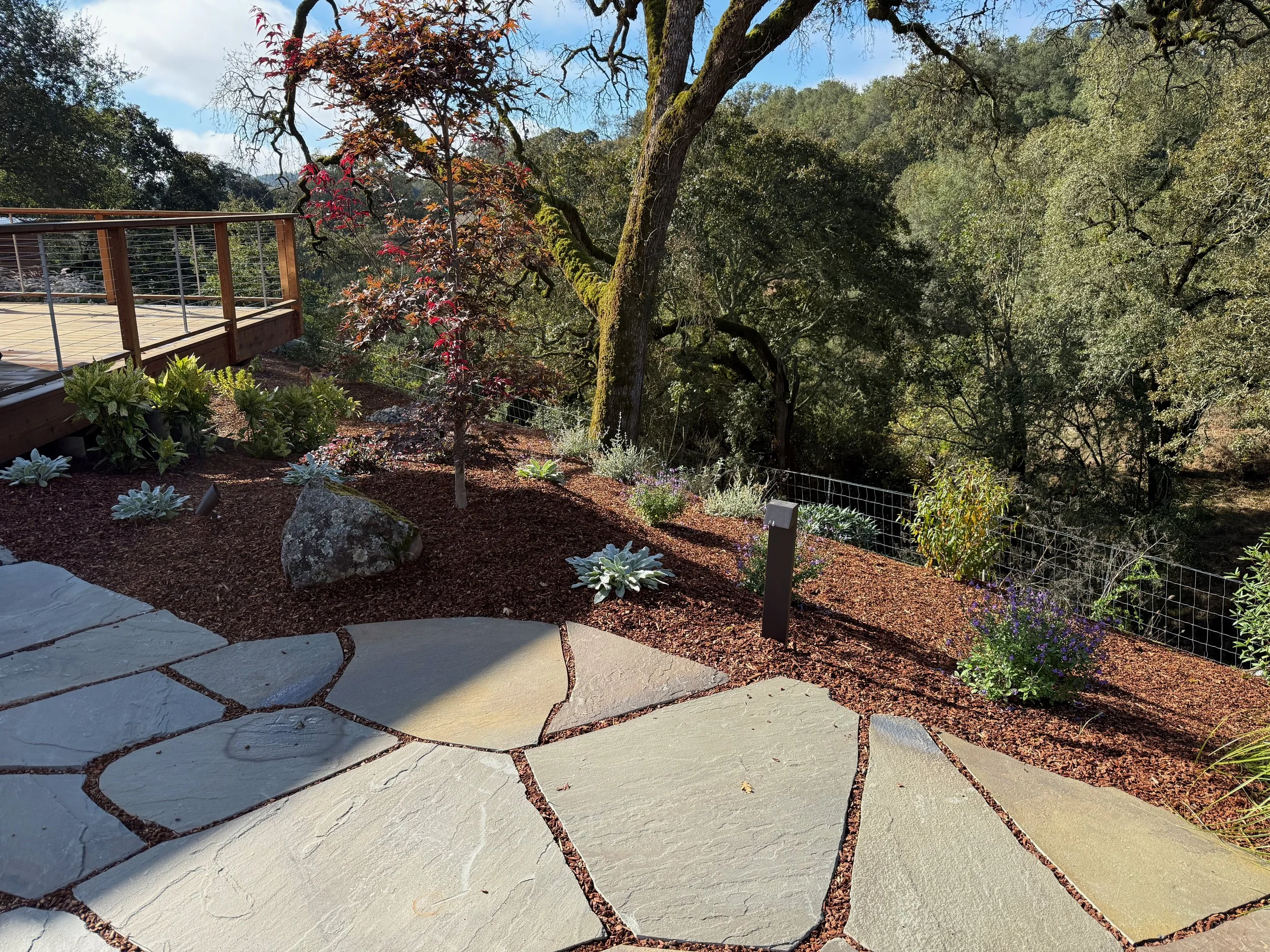
The two natural materials work together to create landscapes that feel established rather than manufactured. Large boulders can be positioned alongside a pathway to define transitions, retain subtle grade changes, or create visual focal points.
One combination we particularly like is flagstone paired with Sonoma Fieldstone boulders.
The two natural materials work together to create landscapes that feel established rather than manufactured. Large boulders can be positioned alongside a pathway to define transitions, retain subtle grade changes, or create visual focal points.
Surrounding the stonework with ornamental grasses, native plants, groundcovers, and drought-tolerant shrubs helps soften the edges and integrate the pathway into the garden.
Flagstone Pathways and Dry Creek Beds
Flagstone also works beautifully alongside dry creek beds.
A pathway can follow the natural curves of a creek bed, cross over it using larger pieces of stone, or provide access through a water-wise garden.
Using similar natural materials throughout the landscape creates cohesion. Rather than having individual features that appear disconnected, the flagstone, creek stone, boulders, gravel, and plants begin to feel like parts of the same landscape.
Different Ways to Install Flagstone Pathways
The installation method depends on how the pathway will be used and the overall design of the property.
Flagstone Stepping Stones
Individual stones can be spaced through gravel, lawn, groundcover, or planting areas. This creates an informal pathway that works particularly well in natural garden settings.
Flagstone Set in Gravel
Flagstone surrounded by decorative gravel provides a clean but relaxed appearance. Gravel helps visually connect the stones while maintaining the natural character of the pathway.
This combination works especially well in water-efficient Sonoma County landscapes.
Flagstone with Tight Joints
Larger pieces of flagstone can also be installed closer together to create a more substantial walking surface. This approach is appropriate for frequently used pathways and areas connecting patios, entrances, pools, and other outdoor living spaces.
Flagstone Steps and Hillside Pathways
Flagstone can also be incorporated into staircases and pathways through sloped landscapes. When combined with natural stone steps, retaining walls, and boulders, the pathway can become an important architectural feature within the garden.
Choosing the Right Flagstone
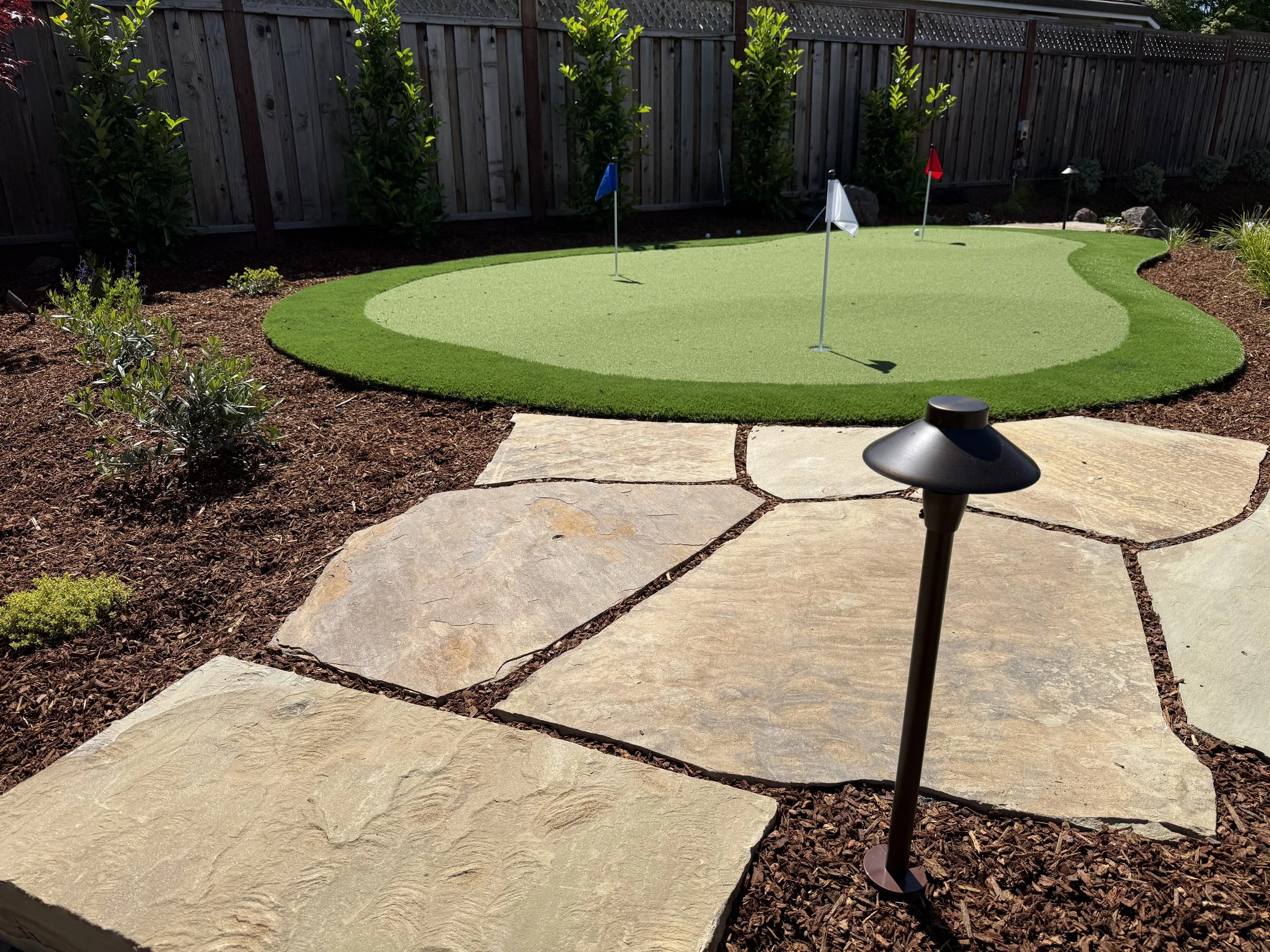
Stone color, thickness, texture, and shape should complement the architecture of the home and the other materials being used throughout the landscape.
Not every type of flagstone creates the same appearance.
Stone color, thickness, texture, and shape should complement the architecture of the home and the other materials being used throughout the landscape.
We often look for stone with natural variations rather than pieces that appear overly uniform. Those irregularities are part of what gives a flagstone pathway its character.
The goal is not necessarily to make every stone identical. Instead, the pathway should feel balanced while maintaining the natural qualities of the material.
Planting Around a Flagstone Pathway
Plants can dramatically change the appearance of a stone pathway.
Low-growing plants and ornamental grasses can soften the edges of the stone, while larger shrubs and trees help create structure around the walkway.
In Sonoma County, we often combine flagstone pathways with drought-tolerant and California native plantings that complement our Mediterranean climate.
Plants can also be strategically positioned to partially obscure sections of a curving pathway. This creates depth and encourages visitors to explore what lies beyond the next turn.
Landscape Lighting Along Flagstone Pathways
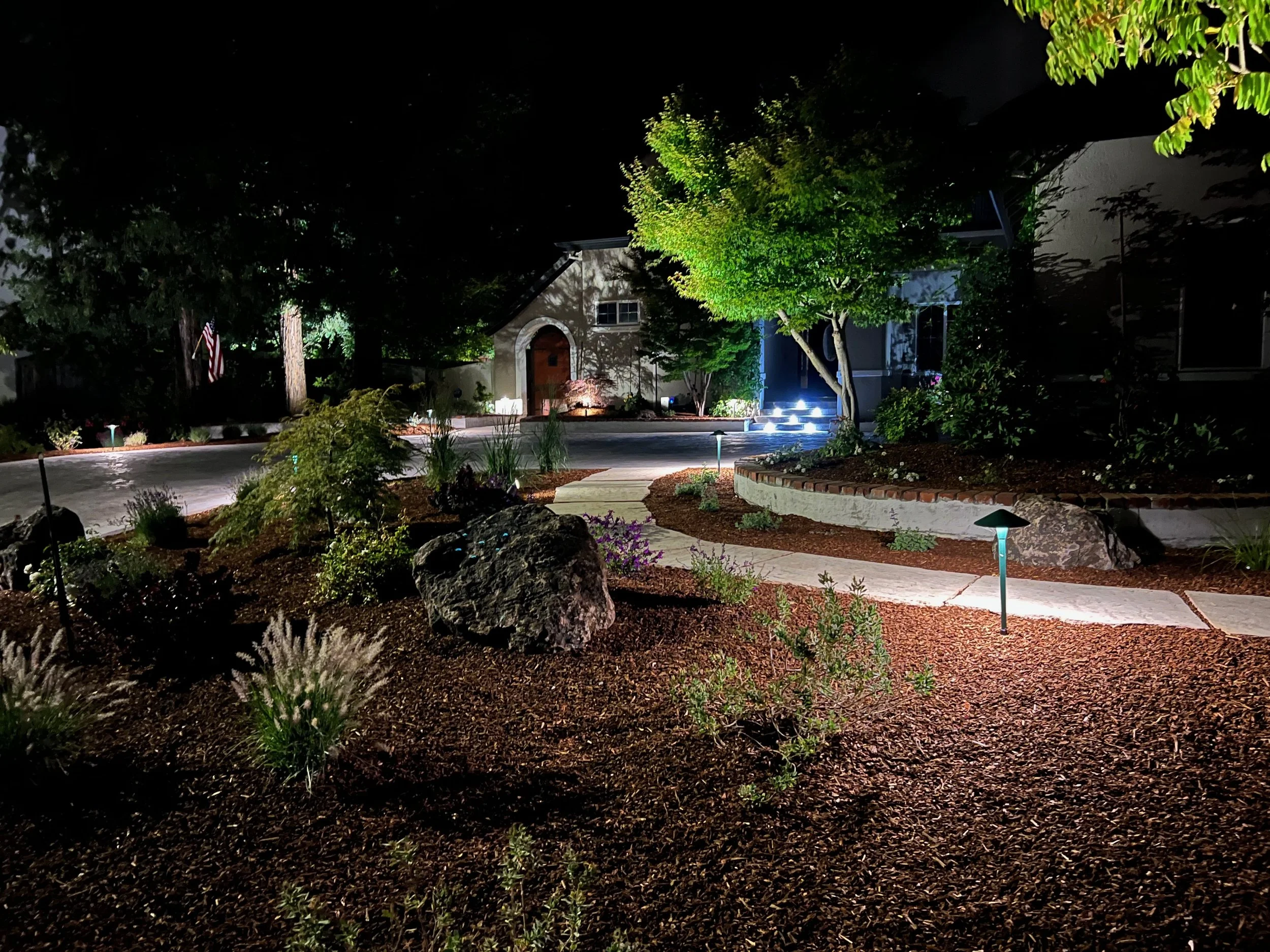
Small path lights can illuminate the walking surface, while strategically positioned accent lights can highlight nearby trees, boulders, ornamental grasses, or architectural features.
Low-voltage landscape lighting can make a flagstone pathway just as beautiful in the evening as it is during the day.
Small path lights can illuminate the walking surface, while strategically positioned accent lights can highlight nearby trees, boulders, ornamental grasses, or architectural features.
The goal should be subtle illumination rather than excessive brightness. Properly designed outdoor lighting improves safety while adding depth and drama to the landscape after sunset.
Designing With Natural Materials
Some of the most successful landscapes use a limited palette of materials repeated throughout the property.
Flagstone pathways can be combined with:
Sonoma Fieldstone boulders
Decorative gravel
Dry creek beds
Natural stone retaining walls
Wood steps
Native and drought-tolerant plants
Ornamental grasses
Low-voltage landscape lighting
Repeating these materials creates consistency and helps the landscape feel intentional from one area to another.
Flagstone Pathways in Sonoma County Landscapes
Flagstone is a timeless landscape material because it bridges the gap between structure and nature. It provides a durable walking surface while maintaining the organic character that works particularly well with Northern California landscapes.
At Moonlight Landscapes, we design and build custom landscapes throughout Sonoma County using natural stone, native and drought-tolerant plantings, decorative gravel, concrete, irrigation, lighting, and other materials selected specifically for each property.
Whether you’re considering a simple garden pathway or a complete landscape design and installation, a thoughtfully designed flagstone pathway can become one of the defining features of your outdoor space.
Looking to create a flagstone pathway or redesign your landscape? Contact Moonlight Landscapes to discuss landscape design and installation in Santa Rosa and throughout Sonoma County.