
Japanese Style Landscapes: Timeless Garden Design for Peaceful Outdoor Living in Sonoma County
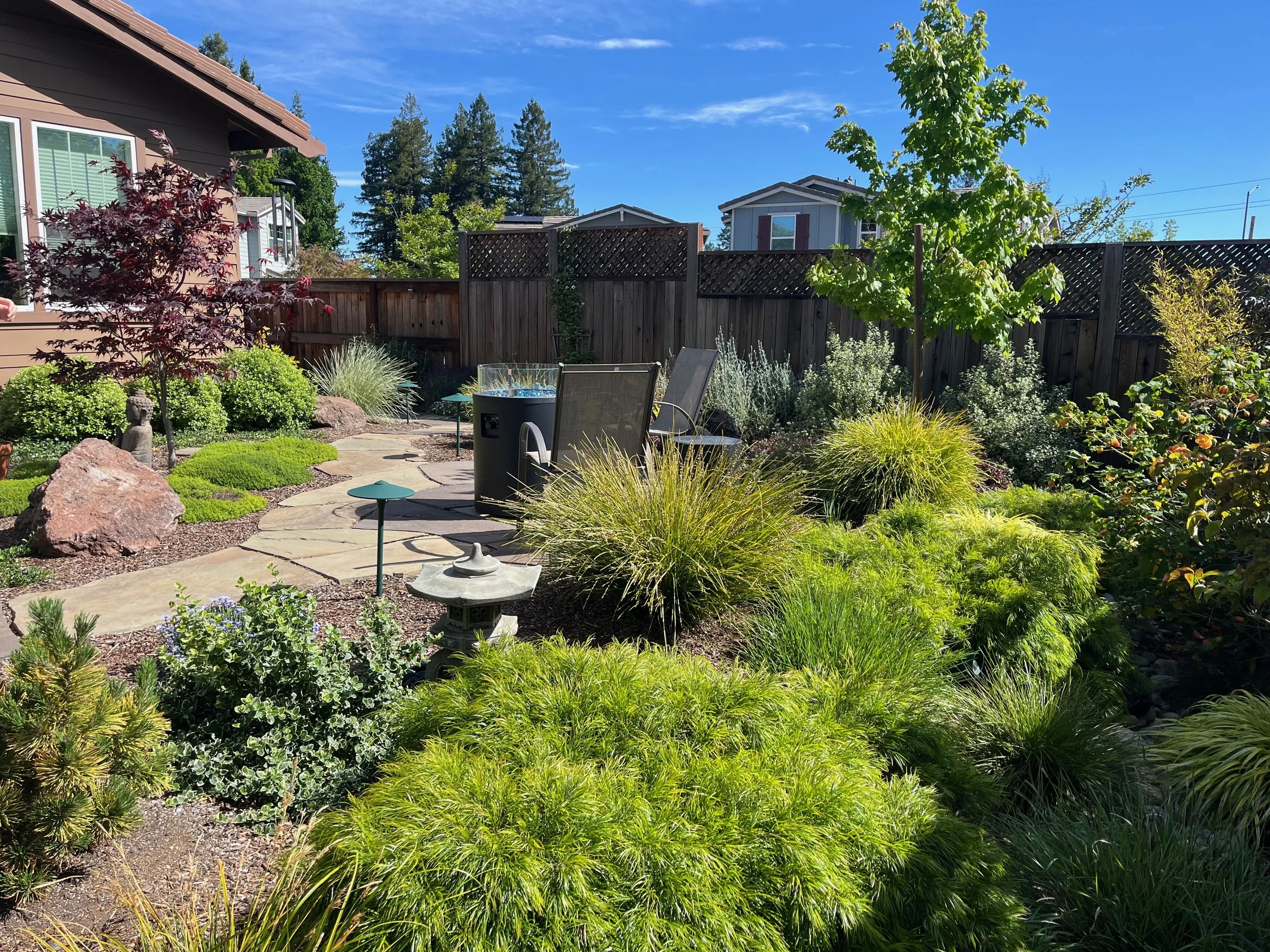
A Japanese-inspired residential landscape featuring natural stone, Japanese maple, ornamental grasses, gravel, and carefully arranged plantings. The landscape demonstrates how traditional Japanese garden principles can be adapted to Sonoma County’s Northern California climate.
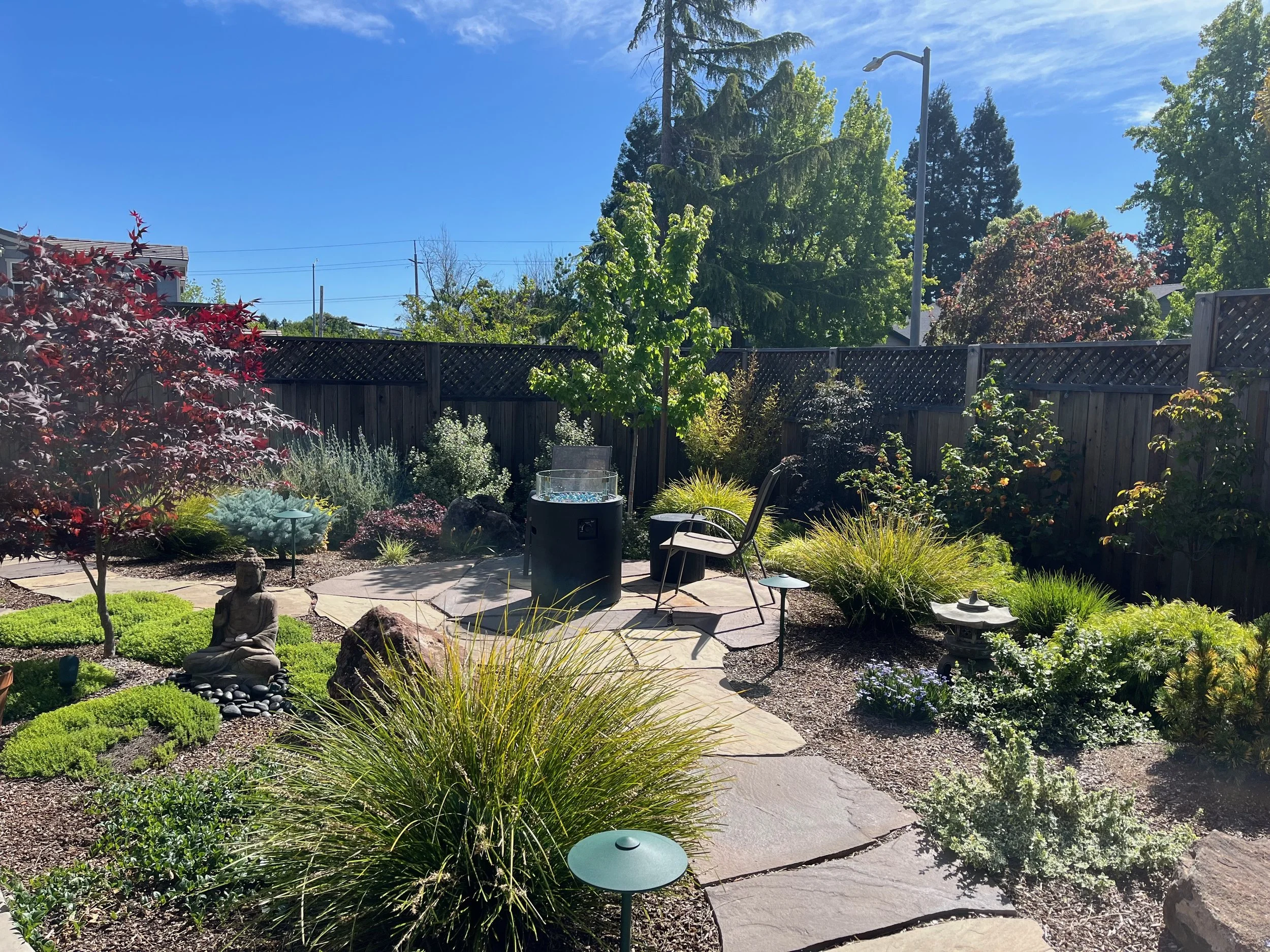
Japanese Inspired landscape in Cotati, CA featuring flagstone patio and firepit, Japanese Maple trees, low maintennace plantings, and outdoor lighting system.
Japanese landscape design is known for its simplicity, balance, natural beauty, and sense of calm. Rather than trying to control nature, Japanese gardens are designed to work with the existing landscape and create a thoughtful connection between the natural and built environments.
From carefully placed boulders and winding pathways to Japanese maples, evergreen plants, gravel, and water features, every element has a purpose. The result is an outdoor space that feels peaceful, intentional, and timeless.
For homeowners in Sonoma County and throughout Northern California, many principles of Japanese garden design can be adapted to create beautiful, water-conscious landscapes that complement both traditional and modern homes.
What Is Japanese Landscape Design?
Japanese landscape design is more than simply choosing Japanese plants or adding a decorative water feature. It is a design philosophy centered around simplicity, natural materials, balance, and the experience of moving through a garden.
Rather than relying on perfect symmetry, Japanese gardens often use asymmetrical arrangements that reflect the irregular patterns found in nature.
Common principles include:
Simplicity and restraint
Balance without strict symmetry
Natural materials
Asymmetrical composition
Thoughtful transitions
Seasonal interest
Connection between architecture and nature
The goal is to create a landscape that feels natural rather than overly designed.
Natural Stone & Boulders
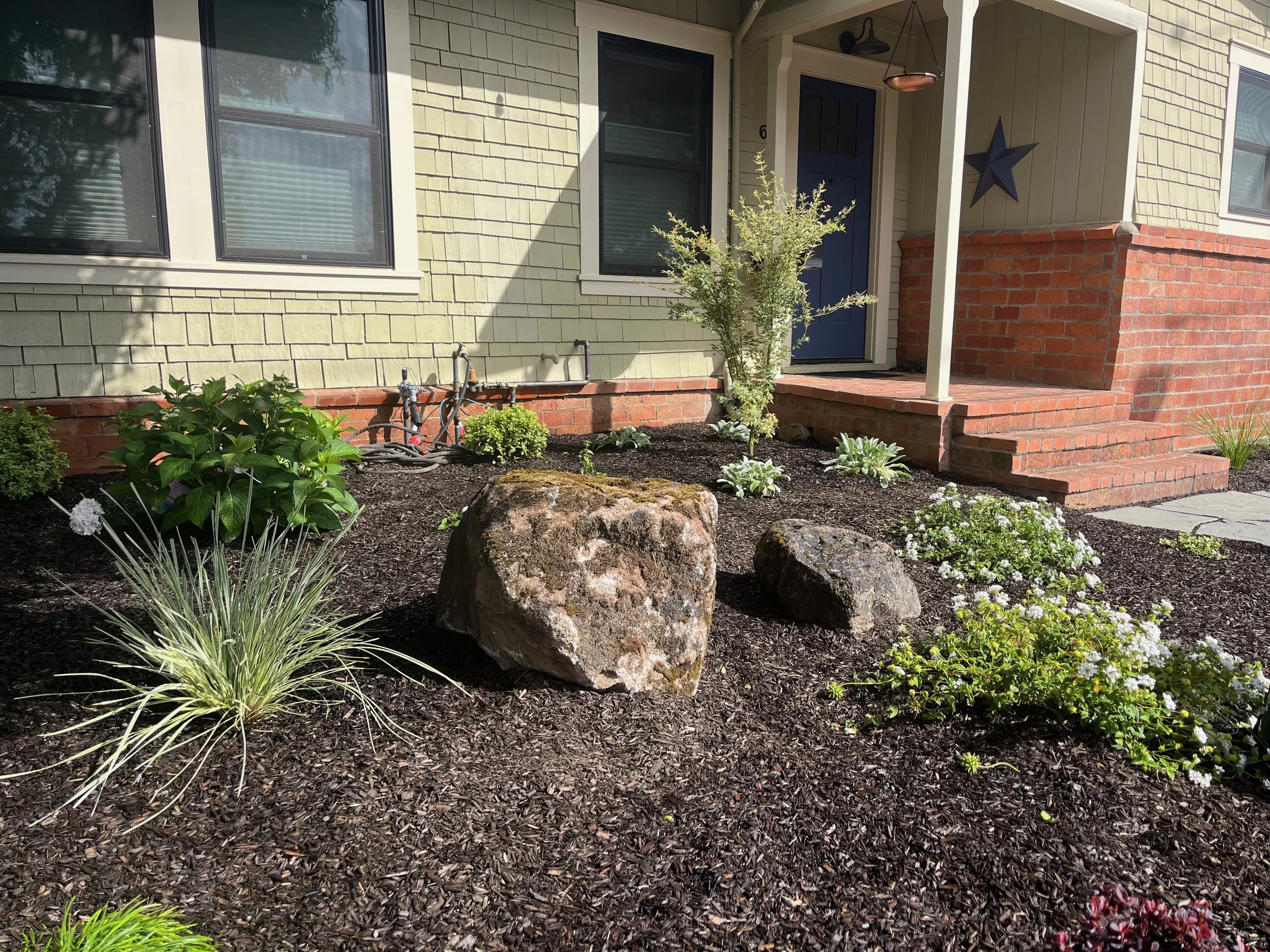
Sonoma Fieldstone boulders featured in Japanes style garden in West Petaluma, CA.
Stone is one of the most important elements in Japanese garden design. Large boulders, stepping stones, gravel, and other natural stone features provide structure and visual weight while creating a connection to the surrounding environment.
Boulders can be positioned to suggest natural mountain formations, while smaller stones can define pathways, garden edges, or focal areas.
In a Sonoma County landscape, locally appropriate natural stone can be incorporated with native and drought-tolerant plants to create a garden that feels both authentic and connected to its surroundings.
Water Features & Dry Creek Beds
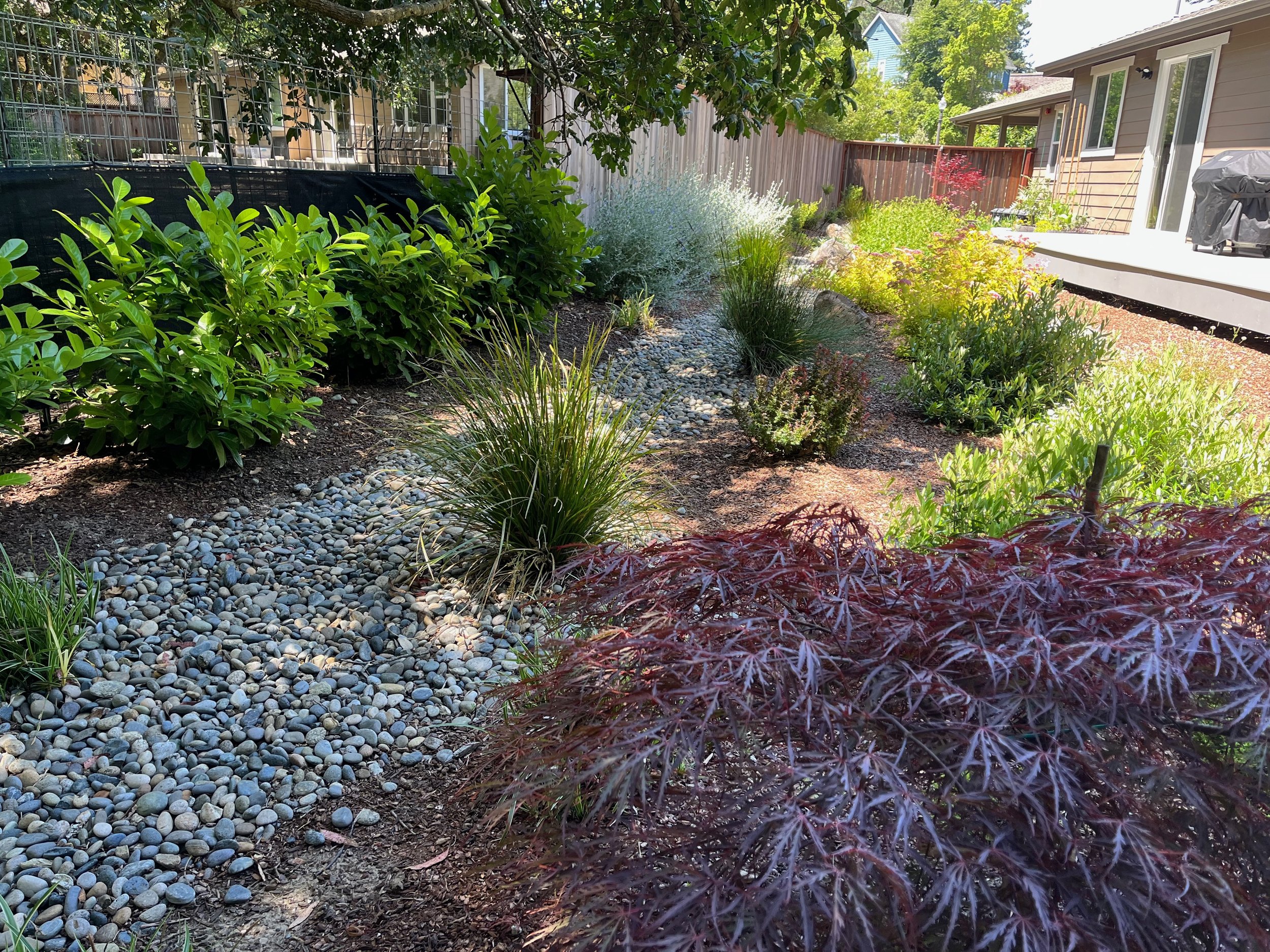
Dry Creek Bed with surrounding landscape featuring Japanese Maples and evergreen shrubs creating a lush Japanese Inspired garden design,
Water represents movement, life, and change in Japanese garden design. Streams, ponds, waterfalls, and other water features can introduce sound and movement while creating a strong focal point.
Not every garden needs a traditional pond or waterfall. Dry creek beds and carefully arranged gravel can suggest the movement of water while providing a lower-maintenance alternative.
Raked gravel is another traditional design element. When arranged in flowing patterns, gravel can represent water and create a peaceful visual experience without requiring an actual water feature.
Japanese Maples & Evergreen Structure
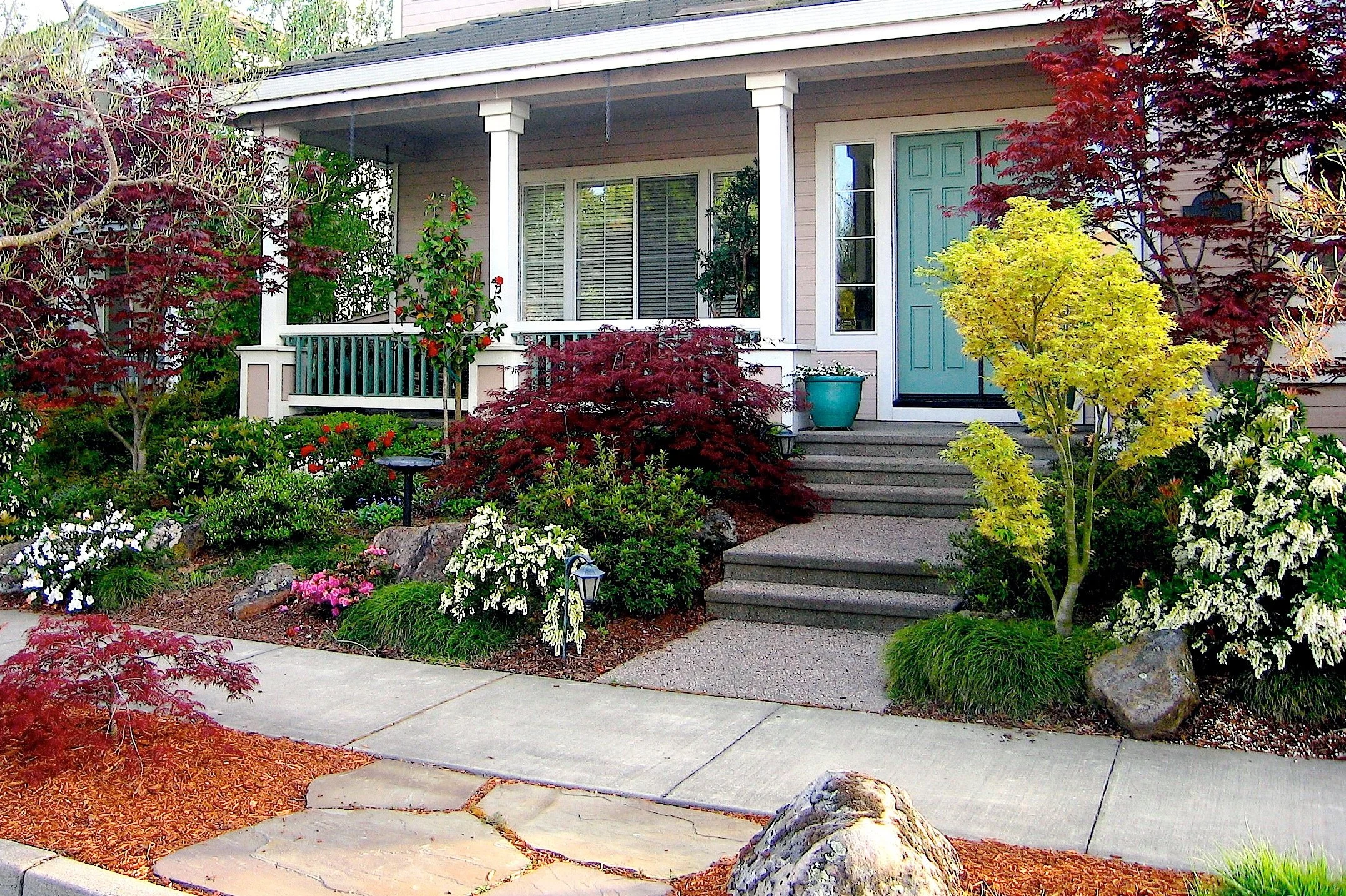
Japanese Inspired shade garden in Petaluma, CA features Japanese Maples, mossy boulders, and low maintenance shade plantings.
Japanese maple trees are among the most recognizable plants associated with Japanese gardens. Their graceful branching structure and seasonal color make them excellent focal points in residential landscapes.
Evergreen plants provide year-round structure, while deciduous trees and shrubs introduce seasonal changes throughout the year.
A thoughtful planting palette might combine:
Japanese maples
Evergreen shrubs
Ferns and shade-tolerant plants
Ground covers
Plant selection should always be based on the specific conditions of the property, including sunlight, soil, drainage, available water, and the surrounding architecture.
Moss, Grasses & Ground Covers
Texture plays an important role in Japanese landscape design. Low-growing plants, ornamental grasses, and ground covers can soften stone surfaces and create transitions between hardscape and planting areas.
In Northern California, traditional moss-heavy gardens may not always be practical depending on the site’s sun exposure and moisture levels. However, similar visual effects can be achieved with carefully selected ground covers, ornamental grasses, and other plants suited to the local environment.
The result is a layered landscape with variation in height, texture, and color without becoming visually overwhelming.
Pathways That Encourage Exploration

West Petaluma, CA gravel staircase and walkway meandering up hillside with natural surroundings and dry creekbed.
Pathways are an important part of Japanese garden design because they guide movement through the landscape.
Instead of revealing the entire garden at once, thoughtfully positioned pathways can create a sequence of views and experiences. A turn in the path, a strategically placed boulder, or a tree partially obscuring the view can encourage visitors to slow down and discover the landscape gradually.
Natural stone stepping paths, gravel walkways, and simple transitions can work especially well in residential gardens.
Japanese Landscape Design for Modern Homes
Japanese-inspired landscapes can work beautifully with modern architecture. Clean lines, natural stone, simple planting palettes, and restrained hardscape elements complement contemporary homes while adding warmth and texture.
For Sonoma County properties, Japanese design principles can also be combined with water-wise landscaping practices.
For example, a modern Japanese-inspired landscape might incorporate:
Drought-tolerant plants
Native California species
Decorative gravel
Natural stone
Japanese maples in appropriate locations
Dry creek beds
Simple concrete or stone pathways
Low-maintenance ground covers
This combination allows homeowners to capture the peaceful character of Japanese garden design while creating a landscape suited to Northern California’s climate.
Benefits of Japanese-Inspired Landscaping
Timeless Design
Japanese gardens emphasize natural materials and simple compositions that can remain visually appealing for decades.
Low-Maintenance Potential
Thoughtful plant selection, simplified planting areas, and durable hardscape materials can reduce ongoing landscape maintenance.
Water-Wise Opportunities
Japanese-inspired gardens can incorporate drought-tolerant plants, gravel, and efficient drip irrigation to create a more water-conscious landscape.
A Peaceful Outdoor Environment
The intentional arrangement of plants, stone, pathways, and open space creates an environment that encourages relaxation and a stronger connection with nature.
Strong Architectural Connection
The restrained style of Japanese garden design pairs naturally with both modern and traditional residential architecture.
Bringing Japanese Garden Principles to Your Sonoma County Landscape
You don’t need a large property to incorporate Japanese landscape design. Even a small courtyard, side yard, or backyard garden can benefit from its principles.
A few strategically placed boulders, a Japanese maple, a simple gravel area, a stone pathway, and thoughtfully selected plants can completely change the character of an outdoor space.
The key is restraint. Rather than adding more features, Japanese-inspired design focuses on selecting the right elements and giving each one room to contribute to the overall composition.
Create a Japanese-Inspired Outdoor Retreat
A well-designed Japanese landscape can transform an ordinary yard into a peaceful outdoor retreat. By combining natural stone, carefully selected plants, pathways, gravel, water-inspired features, and intentional spaces, you can create a landscape that feels grounded, elegant, and connected to nature.
At Moonlight Landscapes, we create custom landscapes throughout Sonoma County that balance thoughtful design, natural materials, functionality, and the unique character of each property.
Whether you’re interested in a complete Japanese-inspired garden or simply want to incorporate elements such as natural stone, a dry creek bed, Japanese maple, or water-wise planting, thoughtful landscape design can bring the vision together.
Contact Moonlight Landscapes to schedule a consultation and begin designing a landscape that feels naturally at home in Sonoma County.